
When to Call a Professional Bee Remover
You spot a few bees buzzing around your porch. Maybe you've noticed them gathering near a vent or heard a faint hum coming from inside a wall. The question that follows is almost always the same: "Do I need to call someone, or will this go away on its own?"
At The Other Bee Guy, we get this call every day—and the answer depends entirely on what's actually happening. Some bee situations resolve naturally. Others escalate quickly into full-blown infestations that are costly and dangerous to ignore. Knowing when to call a professional bee removal expert can save you time, money, and a lot of stress.
This guide walks you through the scenarios where professional help is essential, the situations where waiting might be okay, and the warning signs that mean you should pick up the phone immediately. For a full overview of the removal process and what it costs, see our Complete Guide to Bee Removal in Orlando.
Call Immediately: Emergency Situations
Some situations require an urgent response. Don't wait or try to handle these yourself.
Someone Has Been Stung Multiple Times
A single sting from a honey bee is painful but rarely dangerous for non-allergic individuals. However, multiple stings—especially from an aggressive colony—can cause serious medical emergencies even in people without known allergies. If someone is being swarmed or has received multiple stings:
- Get everyone away from the area immediately
- Call 911 if there's any sign of allergic reaction (swelling, difficulty breathing, dizziness)
- Call a professional bee remover once the immediate medical situation is addressed
Multiple stings often indicate you're dealing with an Africanized honey bee colony, which is significantly more defensive than standard European honey bees.
Bees in a High-Traffic Area
Colonies near doorways, playgrounds, pools, dog runs, or anywhere people and pets frequently pass pose an immediate risk. Even docile honey bees will become defensive if their hive entrance is near constant foot traffic. The situation becomes urgent if:
- Children or elderly residents are nearby
- Pets are being stung or agitated
- The hive entrance is at or below head height
- The area can't easily be avoided
Someone With a Bee Allergy Lives or Works Nearby
For individuals with bee sting allergies, even a single sting can trigger anaphylaxis. If someone with a known allergy is in close proximity to a bee colony, treat it as an emergency and contact us through our contact page right away.
Call Soon: Situations That Will Get Worse
These situations aren't emergencies today, but they will become bigger, more expensive problems if you wait.
Bees Entering and Exiting Your Home's Structure
If you see a steady stream of bees flying in and out of a specific gap in your siding, soffit, roofline, or foundation, they've likely established—or are actively establishing—a colony inside your home. This is the number one sign that you need professional help.
A new colony can build several pounds of wax comb in just a few weeks. Within a few months, you could have:
- 20,000–60,000 bees inside your wall
- Multiple pounds of honeycomb
- Honey that attracts secondary pests (ants, roaches, beetles, rodents)
- Structural damage from moisture and heat
The sooner you call, the simpler and less expensive the removal. A colony that's been in your wall for a week is a fraction of the cost of one that's been there for six months. Read more about what happens when bees nest in walls in our bees in house removal guide.
Buzzing Inside Walls or Ceilings
If you can hear bees through drywall, the colony is already well-established. This is not a "wait and see" situation. The hum will get louder as the colony grows, and eventually you may notice:
- Dark spots or moisture on the wall (honey leaking through)
- A sweet smell near the nesting area
- Bees appearing inside your home through light fixtures, outlets, or gaps in trim
Recurring Bee Activity in the Same Spot
If bees keep showing up at the same location on your property—even after you've shooed them away or sprayed—there's likely an attractant. It could be an old hive (even from a previous year), a structural cavity that's ideal for nesting, or residual beeswax scent from a past colony. Professional removal includes identifying and addressing the root cause.
Bees in Your Shed, Garage, or Outbuilding
Enclosed structures are prime nesting sites. Bees in a shed or garage may go unnoticed for weeks until the colony is large and difficult to access. Our bees in shed removal guide covers this scenario in detail.
You Can Probably Wait: Lower-Urgency Situations
Not every bee sighting means trouble. Here's when it's usually safe to observe before calling.
A Single Bee Indoors
A lone bee inside your home most likely came in through an open window or door. Open a window with direct sunlight (bees navigate toward light), and it will usually find its way out. A single indoor bee does not indicate an infestation.
A Swarm Resting on a Tree or Fence
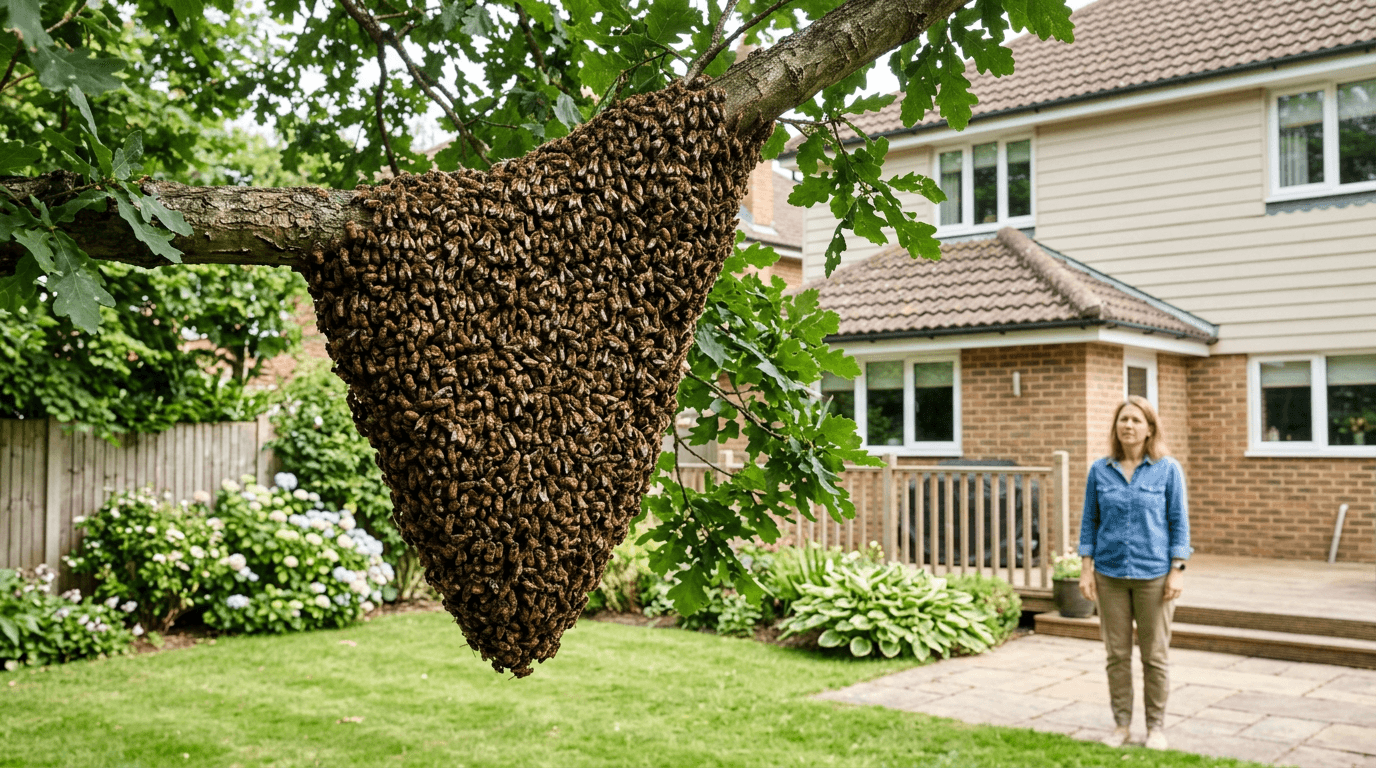
A clustered ball of bees on a branch, post, or wall is a swarm—a colony in transit looking for a permanent home. Swarms are generally docile because they have no hive to defend. In many cases, they'll move on within 24–72 hours.
However, if the swarm:
- Stays longer than 3 days
- Is near a doorway, walkway, or play area
- Begins funneling bees into a gap or cavity nearby
...then it's time to call. A swarm that lingers is likely sending scouts into your home's structure.
Bees Visiting Your Garden
Bees foraging in flower beds, vegetable gardens, or near flowering trees are just doing their job. They're collecting nectar and pollen, and they'll ignore you unless you step on or swat at them. This is normal, healthy pollinator behavior.
A Few Bees Around a Pool or Water Source
Bees need water, especially during Florida's hot months. Scout bees visiting your pool, birdbath, or irrigation drip are foraging—not nesting. You can deter them by providing a separate water source (a shallow dish with pebbles) farther from your pool, or by running the pool's waterfall feature to create surface movement bees don't like.
What a Professional Bee Remover Does That You Can't
Understanding why professional removal matters helps justify the investment—especially when it's tempting to grab a can of spray.
Complete Colony Extraction
A professional removes the entire colony: bees, queen, brood, wax comb, and honey. Leaving any of these behind guarantees future problems. Spraying kills surface bees but doesn't reach the queen or remove the hive.
Proper Species Identification
Is it honey bees, carpenter bees, Africanized bees, wasps, or yellow jackets? Each requires a different approach. Treating the wrong species with the wrong method wastes money and can make the situation worse. Learn more about identification in our Florida stinging bugs guide.
Safe Handling of Aggressive Colonies
Africanized bees, large established colonies, and hives in confined spaces all present serious safety risks. Professional beekeepers have the protective equipment, smokers, bee vacuums, and experience to work safely in these conditions.
Structural Preservation
Opening a wall to access a hive requires care. Cutting in the wrong spot can damage electrical wiring, plumbing, or load-bearing framing. Experienced removers know how to access hives with minimal structural impact.
Prevention and Exclusion
Removal is only half the job. Sealing entry points and eliminating attractants is critical to preventing reinfestation. This is something DIY approaches almost always miss.
Questions to Ask Before Hiring a Bee Remover
Not all bee removal services are created equal. When evaluating providers in the Orlando area, ask:
- Do you remove bees alive? Exterminators kill bees and leave the hive. Professional bee removers extract the colony alive and relocate it.
- Do you remove the honeycomb? If the answer is no, walk away. Leftover comb causes serious secondary problems.
- Are you a licensed and insured beekeeper? Florida has a beekeeper registration program. Ask for proof.
- Do you seal entry points after removal? Proper exclusion work prevents the problem from recurring.
- Can you provide references or reviews? Check our reviews page to see what Orlando homeowners say about The Other Bee Guy.
For a comparison of removal approaches, see our post on bee removal vs. extermination.
Frequently Asked Questions
Will bees go away on their own?
Swarms sometimes leave within 1–3 days. Established colonies inside structures will not leave on their own—they will grow until removed.
How fast can you respond?
We typically schedule inspections within 24–48 hours. Emergency situations with active stinging or safety risks can often be addressed same-day. Contact us and we'll assess urgency immediately.
My landlord says to just spray them. Is that okay?
No. Spraying kills bees but doesn't remove the hive. The leftover comb, honey, and dead bees inside the wall will attract pests and cause damage. A proper removal protects the property long-term.
Can I tell the difference between bees and wasps?
Bees are fuzzy and round-bodied. Wasps are slender with smooth, shiny bodies and longer legs. Both sting, but they require different removal approaches. Our blog covers both wasps and yellow jackets in Florida.
What if I'm not sure what I'm dealing with?
Send us a photo through our contact page. We'll identify the species and recommend next steps—no charge, no obligation.
Don't Wait Until It's an Emergency
The single most important piece of advice we give Orlando homeowners: act early. A bee problem caught in the first few days is simpler, safer, and far less expensive to resolve than one that's been building for months.
If you've noticed any of the warning signs described above—steady traffic at an entry point, buzzing in walls, recurring activity in the same spot—reach out to The Other Bee Guy. We'll tell you honestly whether you need service now, can wait, or don't need removal at all.
Call (407) 473-8585 or schedule an inspection online. We're here to help Orlando homeowners make the right call—literally.