
Bee Removal vs. Extermination: Why It Matters
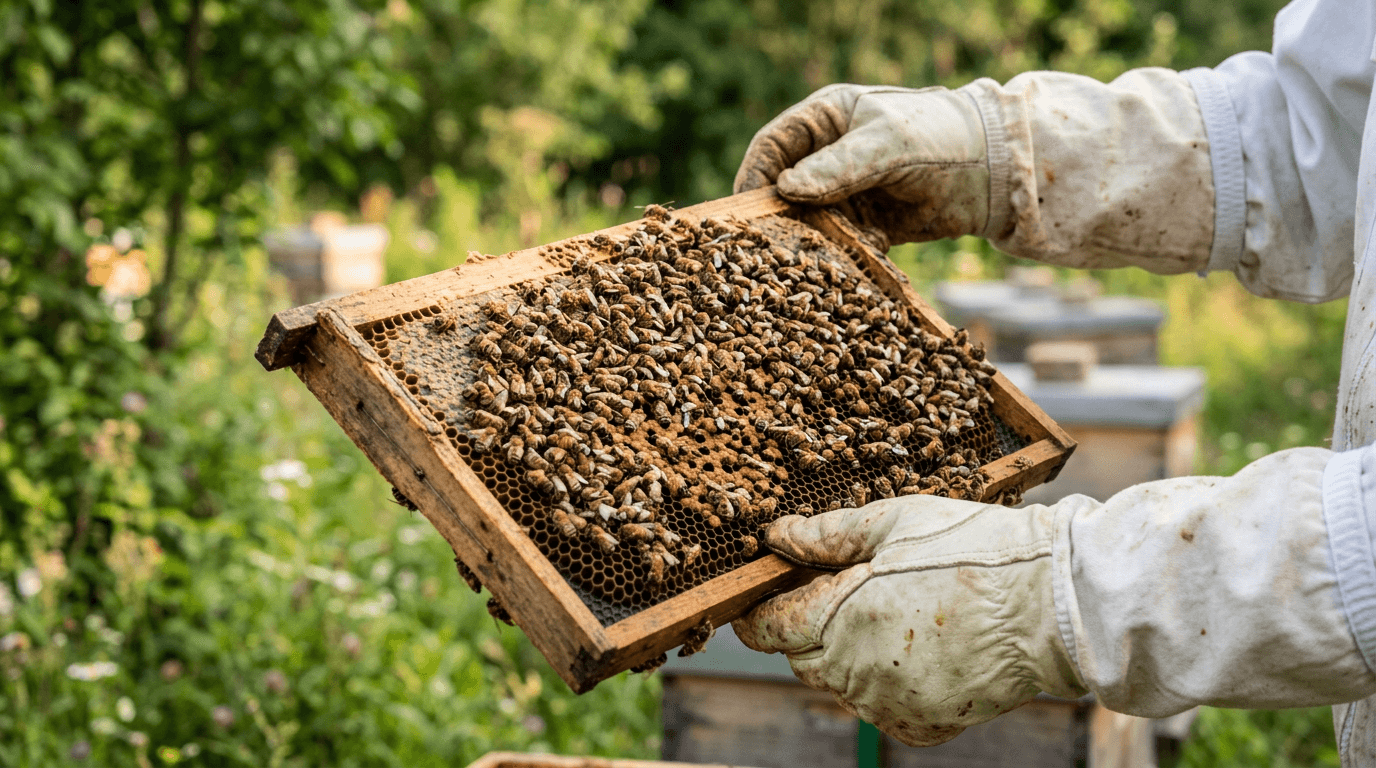
When bees show up on your property, the instinct is to make them go away as fast as possible. For many Orlando homeowners, that means calling a pest control company or reaching for a can of insecticide. But bee removal and bee extermination are fundamentally different approaches—and the one you choose has lasting consequences for your home, your wallet, and the environment.
At The Other Bee Guy, we've spent years cleaning up the aftermath of failed extermination attempts. Walls saturated with melted honey. Secondary pest infestations from decaying comb. And new colonies moving right back into the same spot because the underlying problem was never addressed. As professional bee removal and bee relocation specialists serving the greater Orlando area, we've seen firsthand why humane removal outperforms extermination in every meaningful way.
This post breaks down both approaches so you can make an informed decision. For a comprehensive overview of the full removal process, see our Complete Guide to Bee Removal in Orlando.
What Is Bee Extermination?
Bee extermination is exactly what it sounds like: killing the bees. A pest control technician sprays insecticide into or around the hive entrance, poisoning the colony. The bees die. The technician leaves.
Here's what extermination typically involves:
- Application of pyrethroid-based pesticides or insecticidal dust
- Spraying the entry point and surrounding area
- No removal of the dead colony, honeycomb, or honey
- No sealing of entry points
- Total time on-site: 15–30 minutes
It's fast, and the upfront cost is usually lower than professional removal. But that's where the advantages end.
What Is Professional Bee Removal?
Professional bee removal—the kind we practice at The Other Bee Guy—is a comprehensive process that extracts the entire colony alive, removes all honeycomb and honey from the structure, and seals entry points to prevent future infestations.
Here's what our removal process includes:
- Inspection and species identification — Determine what kind of bees you're dealing with and where they've nested
- Live extraction — Using bee vacuums, smokers, and protective equipment to safely collect the colony, starting with the queen
- Full comb and honey removal — Every piece of wax and all stored honey is removed from the cavity
- Colony relocation — Bees are transported to our apiaries or trusted local beekeepers through our bee relocation process
- Entry point sealing — Gaps, cracks, and openings are sealed to prevent new colonies from moving in
- Prevention guidance — We advise on other vulnerable areas around your property
For the full walkthrough, visit Our Process.
Side-by-Side Comparison
| Factor | Extermination | Professional Removal |
|---|---|---|
| Bees removed alive | No — bees are killed | Yes — colony is relocated |
| Honeycomb removed | No — left inside walls | Yes — fully extracted |
| Honey removed | No — left to melt and leak | Yes — prevents structural damage |
| Entry points sealed | Rarely | Yes — standard part of service |
| Prevents return | No — scent attracts new swarms | Yes — comb removal + sealing |
| Secondary pest risk | High — dead bees and comb attract ants, rodents, beetles | Low — cavity is cleaned out |
| Structural damage risk | High — melting comb, honey leaks | Low — cavity is cleared |
| Environmental impact | Negative — pollinators killed, pesticides introduced | Positive — pollinators preserved |
| Upfront cost | Lower ($150–$400) | Higher ($250–$1,000+) |
| Long-term cost | Much higher (repeat treatments, secondary damage) | Lower (one-time fix) |
| Time on-site | 15–30 minutes | 1–4 hours depending on scope |
The Real Cost of Extermination
Extermination looks cheaper on paper. A pest control company might charge $150–$400 to spray a hive. But here's what happens in the weeks and months after:
1. The Hive Rots Inside Your Walls
Dead bees, larvae, wax, and honey don't just disappear. Without living bees to regulate temperature and maintain the hive, everything starts to break down. In Florida's heat, wax melts quickly—releasing honey that soaks into insulation, drywall, and wood framing.
We've opened walls where homeowners sprayed months earlier and found:
- Pounds of melted comb and crystallized honey embedded in insulation
- Mold growth from sustained moisture
- Structural wood softened by prolonged honey exposure
- Staining that bled through paint on interior walls
2. Secondary Pests Move In
Decaying hive material is a feast for opportunistic pests. After an extermination, we commonly find:
- Ants — especially Florida carpenter ants — colonizing the leftover honeycomb
- Hive beetles and wax moths feeding on remaining comb
- Rodents attracted to the protein from dead bee larvae
- Roaches drawn to the moisture and organic material
What started as a bee problem becomes a multi-pest problem. Each of these secondary infestations requires its own treatment, multiplying costs.
3. New Bee Colonies Return
This is the most frustrating consequence. Beeswax and propolis leave a powerful chemical scent that attracts scout bees for years. A sprayed-out cavity that hasn't been cleaned and sealed is essentially a "Vacancy" sign for the next swarm.
We've been called to properties where homeowners have had the same spot sprayed three or four times—spending more on repeated extermination than a single professional removal would have cost.
4. Pesticide Contamination
Insecticides sprayed into wall cavities don't stay contained. They can:
- Contaminate honey that leaks into living spaces
- Off-gas into indoor air through gaps and fixtures
- Leach into soil around the foundation
- Affect beneficial insects in the surrounding area
Why Humane Removal Is Better for Your Home
Setting aside the environmental argument for a moment, let's focus purely on the practical outcomes for your property.
Complete Problem Resolution
Professional removal addresses every component of the infestation: the bees, the comb, the honey, the entry point, and the attractant scent. Extermination addresses only the bees—and incompletely, since deep-hive bees and the queen often survive initial spraying.
No Secondary Damage
When the cavity is fully cleaned out, there's nothing left to rot, melt, leak, or attract pests. Your walls stay dry, your insulation stays intact, and you don't wake up to honey dripping from a ceiling fixture.
One-Time Fix
Proper removal with exclusion work is a permanent solution. We've done thousands of removals, and the reinfestation rate after proper comb extraction and sealing is extremely low. Compare that to the repeat-spray cycle that extermination often creates.
Property Value Preservation
Active or past bee infestations that weren't properly resolved can surface during home inspections. Honey stains, pest damage, and evidence of spraying in wall cavities are red flags that can complicate a sale. A professional removal with documented comb extraction gives you a clean bill of health.
Why Humane Removal Is Better for the Environment
Honey bees are responsible for pollinating approximately one-third of the food we eat. Their populations have been under sustained pressure from habitat loss, pesticide exposure, parasites, and disease. Every colony that can be safely relocated instead of destroyed contributes to pollination, biodiversity, and food security.
At The Other Bee Guy, the colonies we relocate go on to:
- Produce local honey — Available through our local honey page
- Pollinate local crops and gardens — Supporting Central Florida's agricultural and residential ecosystems
- Supply new beekeepers — Through our bee nucs and nucleus hive program
- Support education — We use relocated colonies in our education and mentorship programs
Every colony we save is a win for the environment and for our community.
"But My Pest Control Guy Said Spraying Is Fine..."
We hear this regularly. Many pest control companies are honest and skilled at what they do—but bee removal isn't their specialty. Here's what standard pest control training covers for bees:
- Identify the insect
- Apply appropriate pesticide
- Move on to the next call
What it typically doesn't cover:
- Live bee extraction techniques
- Comb and honey removal from structural cavities
- Colony behavior and queen management
- Relocation logistics
- Long-term prevention specific to bee biology
There's no fault in this—it's simply a different scope of work. But when the result is a dead colony rotting inside your walls, the homeowner pays the price.
When Extermination Might Be Justified
We believe in honesty, and there are rare situations where extermination may be the only viable option:
- Confirmed Africanized bee colony in an area with immediate public safety risk where live extraction would endanger the remover or nearby people
- Colonies in locations that are physically impossible to access for live removal (extremely rare with modern techniques and equipment)
- Severe allergic individuals on-site where even the brief disruption of live removal poses unacceptable risk
Even in these cases, the comb and honey should still be removed after the bees are neutralized. Spraying and walking away is never an acceptable solution.
How to Choose the Right Service in Orlando
When evaluating bee removal providers, ask these questions:
| Question | Good Answer | Red Flag |
|---|---|---|
| Do you remove bees alive? | Yes, we relocate them | We spray/kill them |
| Do you remove the honeycomb? | Yes, completely | No / we seal over it |
| Do you seal entry points? | Yes, included in service | That's separate / not offered |
| Are you a registered beekeeper? | Yes, here's my certification | We're a pest control company |
| What happens to the bees? | Relocated to apiaries/beekeepers | They're disposed of |
| Do you guarantee against return? | Yes, when comb is removed and sealed | No / we'll re-spray if they come back |
Check our reviews page to see why Orlando homeowners choose The Other Bee Guy over extermination services.
Frequently Asked Questions
Is bee removal more expensive than extermination?
The upfront cost is higher, but the total cost of ownership is lower. Extermination often leads to repeat treatments, secondary pest infestations, and structural damage that far exceeds the cost of a single professional removal.
Will the bees come back after professional removal?
When comb is fully extracted and entry points are properly sealed, reinfestation is extremely unlikely. The scent attractant is gone and the access is blocked.
Can pest control companies do live removal?
Most cannot. Live bee extraction requires beekeeping expertise, specialized equipment, and a destination for the colony. Standard pest control licenses don't include this training.
Is it illegal to kill bees in Florida?
There's no law prohibiting it, but Florida strongly encourages live removal through its beekeeper registration program. Killing bees when a viable removal option exists is increasingly viewed as irresponsible by both the public and the industry.
What if the exterminator already sprayed and now I have problems?
Call us. We perform post-extermination cleanups regularly—removing dead bees, degraded comb, and contaminated material from wall cavities, then sealing the area properly. It costs more than an initial removal would have, but it's the only way to resolve the secondary damage.
Make the Right Choice for Your Home and Your Community
The decision between bee removal and extermination comes down to this: do you want a quick fix that creates new problems, or a complete solution that works the first time?
At The Other Bee Guy, we've built our reputation on doing things the right way. Every colony we remove is relocated alive. Every cavity is cleaned out. Every entry point is sealed. And every homeowner gets an honest assessment, transparent pricing, and professional service.
Ready to solve your bee problem the right way? Call (407) 473-8585 or request an inspection online. We serve the greater Orlando area including Winter Park, Kissimmee, Lake Nona, Altamonte Springs, and surrounding communities.