
Paper Wasps in Florida: Identification & Removal
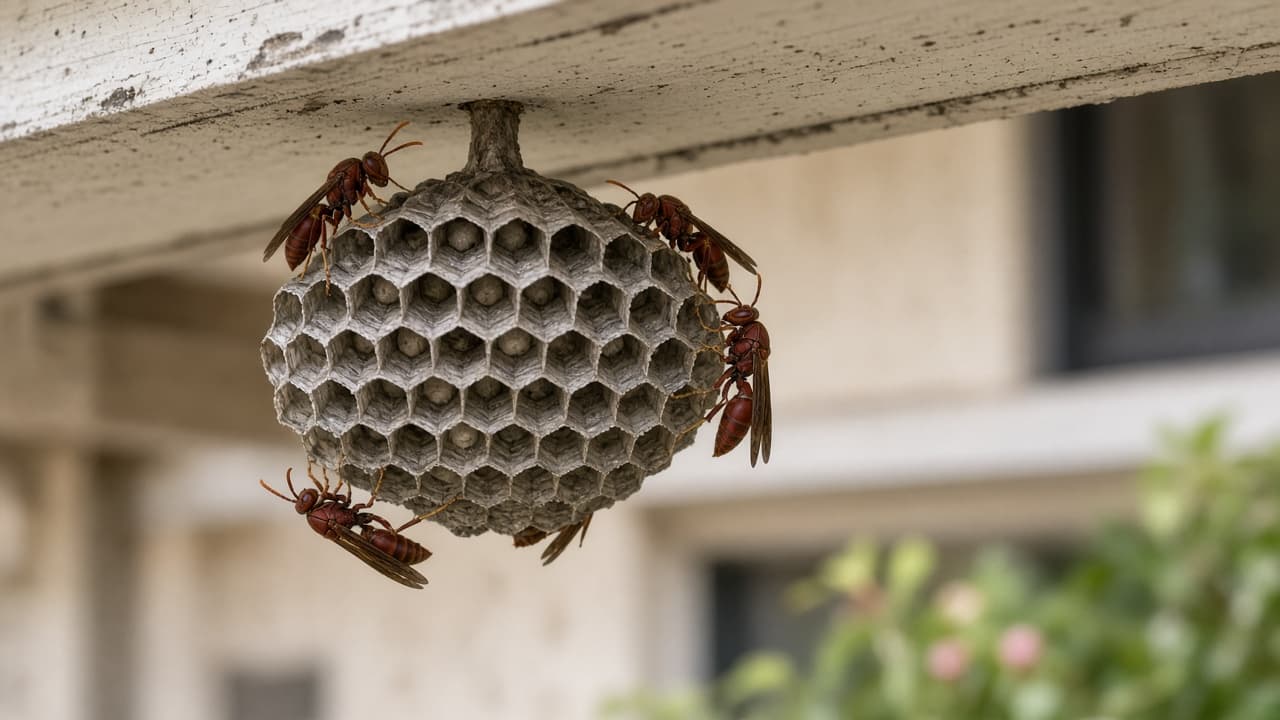
If you've spotted an umbrella-shaped nest tucked under your eaves or porch ceiling, you're likely looking at paper wasps. They're one of the most common stinging insects Florida homeowners deal with, especially from spring through fall. The good news? Paper wasps are far less aggressive than their reputation suggests—but that doesn't mean you want a nest by your front door.
At The Other Bee Guy, we come across paper wasps in Florida constantly while handling bee and wasp calls across the Orlando area. Here's how to identify them and deal with a nest safely.
Need a nest removed near a doorway or play area? Contact us at (407) 473-8585 for help.
What Are Paper Wasps?
Paper wasps get their name from the papery material they build their nests with—a mix of chewed wood fibers and saliva. They belong to the Polistes genus, and several species are common throughout Florida.
Unlike honey bees, paper wasps are predators and pollinators. They hunt caterpillars and other insects to feed their larvae, which actually makes them beneficial for your garden. The problem is purely about location: when they nest near human activity, the risk of stings goes up.
How to Identify Paper Wasps
Paper wasps have a distinctive look that sets them apart from bees, yellow jackets, and hornets:
- Slender body, about 0.75 to 1 inch long
- Long legs that dangle noticeably during flight
- A narrow, pinched "waist" between thorax and abdomen
- Coloration ranging from reddish-brown to dark brown, often with yellow markings
- Smooth, not fuzzy (bees are hairy by comparison)
The Nest Is the Biggest Clue
The easiest way to identify paper wasps is by their nest:
- Open, umbrella-shaped comb with visible hexagonal cells
- Attached to a surface by a single stalk
- Usually gray or tan and papery in texture
- Typically the size of a fist or small plate, though they can grow larger
- Found under eaves, porch ceilings, railings, mailboxes, grills, and play equipment
This open comb is the key difference from yellow jackets and hornets, whose nests are enclosed in a papery shell. Compare species in our Florida stinging insects guide.
Paper Wasps vs. Yellow Jackets vs. Hornets
It's easy to confuse these stinging insects, but the differences matter for removal:
| Feature | Paper Wasps | Yellow Jackets | Hornets |
|---|---|---|---|
| Nest | Open umbrella comb | Enclosed, often underground | Large enclosed football shape |
| Aggression | Low to moderate | High | High |
| Size | 0.75–1 inch | 0.5 inch | 1–1.5 inch |
| Location | Eaves, railings | Ground, wall voids | Trees, shrubs, eaves |
If you're not sure what you're dealing with, it's safest to assume a more aggressive species and keep your distance.
Are Paper Wasps Dangerous?
Paper wasps are generally not aggressive. They usually only sting when they feel their nest is directly threatened. If you leave them alone, they'll often leave you alone.
That said, they can sting—and unlike honey bees, a paper wasp can sting multiple times because its stinger isn't barbed. A sting is painful, and for people who are allergic, it can be serious.
The real concern is nest location. A nest tucked in a quiet corner of the yard is low-risk. A nest beside your front door, over a walkway, or near where children play is a problem waiting to happen.
When to be cautious: If anyone in your home has a wasp allergy, even a low-traffic nest is worth removing. Keep an EpiPen accessible and read our guide on what to do if you get stung.
When Are Paper Wasps Most Active?
In Florida's warm climate, paper wasps are active for much of the year, but there's a seasonal rhythm:
- Spring: Overwintered queens emerge and start new nests. This is the best time to prevent nests before they grow.
- Summer: Nests reach peak size and worker numbers. Activity is highest.
- Fall: Colonies produce new queens; the nest begins to decline.
- Winter: The colony dies off and fertilized queens overwinter in sheltered spots. Old nests are abandoned and not reused.
Because old nests aren't reused, removing an empty winter nest is mostly cosmetic—but sealing the spot helps prevent a new nest next spring.
How to Remove a Paper Wasp Nest Safely
Small, newly started nests can sometimes be handled by a homeowner, but there's real risk involved. If you decide to tackle a small nest, follow these precautions:
Do It at Night or Dawn
Wasps are far less active and most of the colony is on the nest in low light. Never remove a nest in the heat of the day when workers are out and defensive.
Wear Protective Clothing
Cover all exposed skin—long sleeves, pants, gloves, closed shoes, and eye protection. Wasps target any gap.
Have an Exit Plan
Know exactly where you'll move to quickly. Don't use a ladder in an awkward position where you can't retreat.
Don't Stand Directly Below
Position yourself to the side, never directly under the nest where falling wasps can reach you.
What to Avoid
- Don't swat or knock an active nest with a broom—this guarantees a defensive swarm
- Don't use a hose—it rarely works and provokes the colony
- Don't try to burn it—a serious fire and injury risk
When to Call a Professional
Some situations aren't worth the risk of a DIY attempt. Call a professional if:
- The nest is large or well-established
- It's in a hard-to-reach spot (high eaves, inside a wall void)
- The nest is near a doorway, walkway, or play area
- Anyone in the home has a wasp or bee allergy
- You're unsure whether they're paper wasps or a more aggressive species
- A previous removal attempt made them more defensive
The Other Bee Guy helps homeowners across Orlando identify and deal with stinging insects. While we specialize in humane bee removal and relocation, we can assess your wasp situation and recommend the safest path forward.
Preventing Paper Wasps
Once a nest is gone, keep them from coming back:
- Seal cracks and gaps in eaves, siding, and around windows
- Hang nests early. Check for new spring nests and remove them while they're tiny
- Reduce attractants. Keep trash covered and clean up fallen fruit and sugary spills
- Fill voids in railings, hollow posts, and unused equipment
- Inspect regularly, especially porches, grills, and playsets
For a complete home-protection plan, see our guide on how to bee-proof your home in Florida.
Frequently Asked Questions
Are paper wasps aggressive?
Not usually. They're among the more docile stinging insects and typically only sting when their nest is threatened. Location near high-traffic areas is the main reason to remove one.
Do paper wasps reuse their nests?
No. Each fall the colony dies off and the nest is abandoned. New queens start fresh nests in spring, so old nests can be safely removed and the spot sealed.
How many times can a paper wasp sting?
Multiple times. Unlike honey bees, paper wasps have smooth stingers and don't lose them, so a single wasp can sting repeatedly if it feels threatened.
Should I remove a paper wasp nest myself?
Only if it's small, newly started, easy to reach, and no one in your home is allergic. Larger or awkwardly placed nests—and any situation involving allergies—are safer left to a professional.
Are paper wasps good for anything?
Yes. They prey on caterpillars and other pest insects and help pollinate, making them beneficial in the garden. The goal is to coexist when possible and only remove nests that pose a risk.
Get Help With Stinging Insects
Paper wasps don't have to be a threat—but a nest in the wrong spot is worth handling before someone gets stung. The Other Bee Guy serves the greater Orlando area with expert, humane service for bees and advice on wasps and hornets.
Learn to tell local species apart in our Florida stinging insects guide, or contact us at (407) 473-8585 for help keeping your home sting-free.