
Florida Stinging Insects: Complete ID & Safety Guide
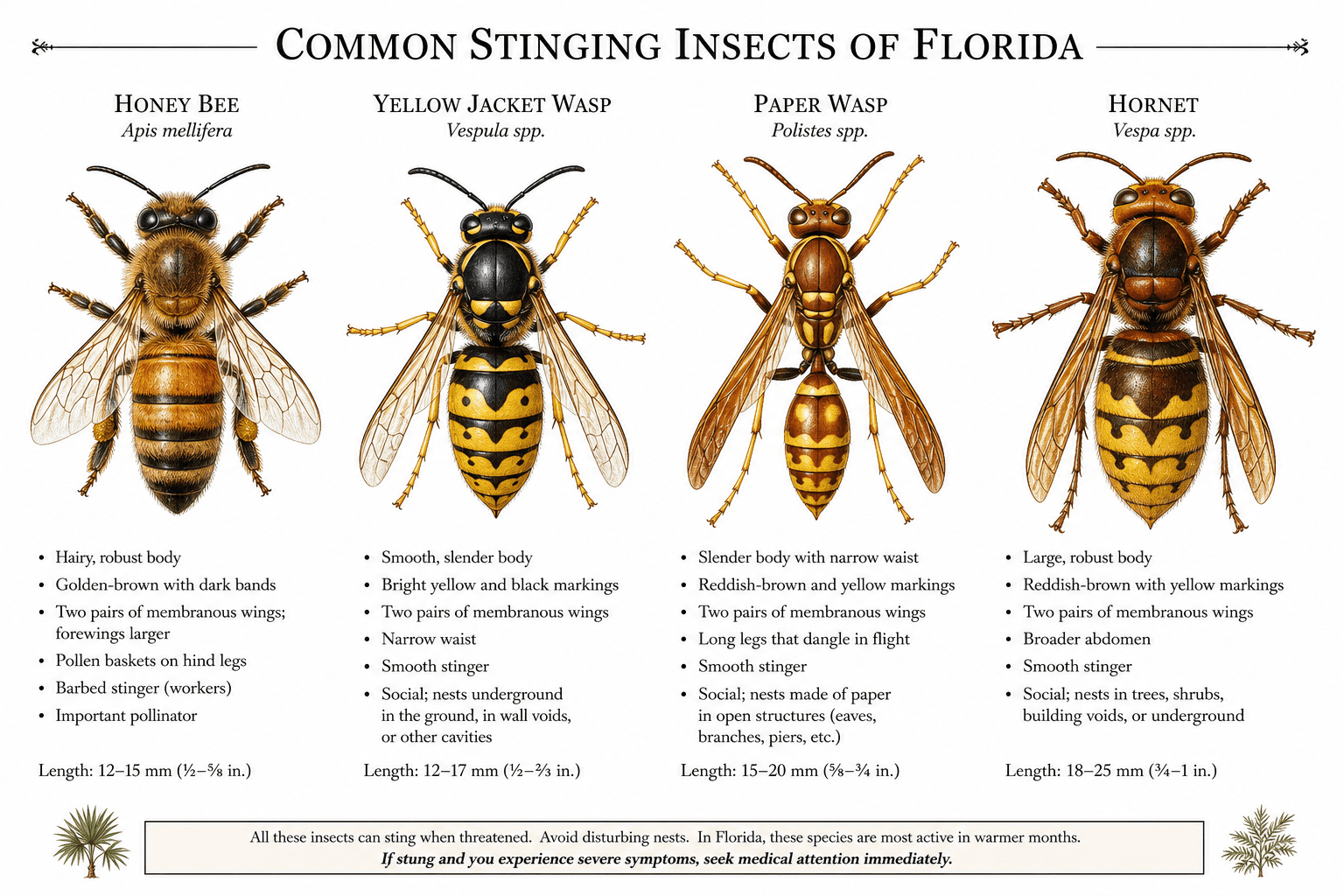
Florida's warm climate and lush vegetation make it a year-round paradise for stinging insects in Florida. From beneficial pollinators to defensive wasps, our state hosts dozens of species that can deliver a painful—and sometimes dangerous—sting.
Knowing how to identify bees and wasps is the first step to staying safe. At The Other Bee Guy, we get calls every day from homeowners who don't know what's buzzing around their property. The right identification often makes the difference between a quick relocation and an expensive emergency.
This complete guide covers the most common stinging insects Florida residents encounter, how to tell them apart, and what to do if you find one (or thousands) on your property.
Why Identification Matters
Before you grab a can of bug spray, take a moment to identify what you're dealing with. Here's why:
- Honey bees are protected pollinators—killing them is often illegal and always unethical
- Different species require different removal methods
- Some are aggressive; others are nearly harmless
- Misidentification leads to wasted money and continued problems
The most common mistake we see? People calling about "killer bees" that turn out to be docile carpenter bees, or "harmless bees" that turn out to be aggressive yellow jackets.
Honey Bees (Apis mellifera)
The MVPs of pollination, honey bees are essential to Florida's agriculture and ecosystems.
Identification:
- Golden-brown with dark bands
- Fuzzy, robust body (about 1/2 inch long)
- Pollen baskets visible on hind legs
- Hairy thorax (chest area)
Behavior:
- Generally docile
- Only sting when threatened
- Die after stinging (workers only)
- Build wax comb in cavities
Where you'll find them: Tree hollows, wall voids, soffits, sheds, chimneys, and water meter boxes are all common Florida hiding spots.
What to do: Never spray honey bees. Call a professional bee removal service. We can relocate the entire colony alive.
Africanized Honey Bees ("Killer Bees")
Africanized bees look nearly identical to European honey bees, but they're significantly more defensive. Florida has had established Africanized populations since the early 2000s.
Key differences:
- More easily provoked (vibrations, sounds, even shadows)
- Defend a larger area around the hive (up to a quarter mile)
- Attack in much larger numbers
- Pursue threats farther
- Recover faster after disturbance
Safety tips:
- Run in a straight line if attacked
- Cover your face with your shirt
- Take shelter indoors or in a vehicle
- Don't jump in water (they'll wait)
- Never disturb a wild hive on your own
When in doubt, treat all wild colonies in Florida as potentially Africanized and call professionals.
Yellow Jackets (Vespula spp.)
The most aggressive stinging insects in Florida, yellow jackets are responsible for more stings than any other species in the state.
Identification:
- Bright yellow and black markings
- Smooth, slender body (not fuzzy)
- Narrow waist
- Shiny appearance
- About 1/2 inch long
Behavior:
- Highly aggressive when nest is disturbed
- Can sting multiple times
- Attracted to sweet foods and protein
- Build paper nests in the ground or in voids
Where you'll find them: Ground burrows, hollow trees, wall voids, attics, and rotting logs. They're often discovered when lawn equipment disturbs a nest.
Danger level: HIGH. Yellow jackets are the #1 cause of stinging insect emergencies in Florida.
Paper Wasps (Polistes spp.)
These are the umbrella-shaped nests you commonly see hanging from eaves.
Identification:
- Reddish-brown to dark with yellow markings
- Long, slender body with very narrow waist
- Long legs that dangle in flight
- About 3/4 inch long
Behavior:
- Moderately defensive
- Will sting if nest is approached within 3–6 feet
- Single open-cell nest (visible cells from below)
- Small colonies (10–100 wasps)
Where you'll find them: Under eaves, on porch ceilings, in playsets, behind shutters, and inside grills.
Removal: Small nests can sometimes be handled with wasp spray at night. Large or hard-to-reach nests require professional help.
Bald-Faced Hornets
Not technically a hornet—they're actually a type of yellow jacket—but bald-faced hornets are among Florida's most intimidating stingers.
Identification:
- Black with white markings on face and abdomen
- Large (3/4 to 1 inch long)
- Build the iconic gray, football-shaped paper nests
Behavior:
- Very defensive of nest
- Can sting repeatedly
- Attack in large numbers
- Squirt venom at perceived threats
Where you'll find them: Hanging from tree branches, shrubs, eaves, and utility poles. Nests can reach the size of a basketball by late summer.
Removal: Always call a professional. These nests are too dangerous for DIY removal.
Carpenter Bees
The "gentle giants" that drill into wood structures around your home.
Identification:
- Large (about 1 inch long)
- Shiny black abdomen (no fuzz)
- Yellow fuzzy thorax
- Hover persistently in one spot
Behavior:
- Males are aggressive-looking but cannot sting
- Females can sting but rarely do
- Drill perfectly round holes in wood
- Solitary (no colony defense)
Damage potential: Their tunneling can cause structural wood damage over time.
Learn more in our carpenter bee guide.
Bumble Bees
Florida has several bumble bee species. They're important pollinators and rarely a threat.
Identification:
- Very fuzzy, robust body
- Black and yellow (sometimes orange)
- Larger than honey bees
- Loud, buzzing flight
Behavior:
- Docile unless nest is disturbed
- Can sting multiple times
- Small colonies (50–400 bees)
- Often nest in the ground
What to do: Leave them alone if possible. They die off naturally in late fall.
Mud Daubers
Often confused with wasps, these solitary insects are actually beneficial.
Identification:
- Long, thin body with extremely narrow waist
- Black, blue-black, or metallic blue
- Build tube-shaped mud nests
Behavior:
- Solitary (no colony to defend)
- Rarely sting humans
- Hunt spiders to feed their young
Removal: Usually not necessary. They're beneficial and non-aggressive.
How to Tell Bees from Wasps at a Glance
| Feature | Bees | Wasps |
|---|---|---|
| Body | Fuzzy, robust | Smooth, slender |
| Waist | Thick | Narrow ("wasp waist") |
| Diet | Pollen and nectar | Insects and sweets |
| Stinger | Once (honey bees) or many (others) | Many times |
| Aggression | Generally docile | Often defensive |
| Pollination | Yes—essential | Minimal |
What to Do If You're Stung
For most people, a single sting causes localized pain, swelling, and redness. Here's how to respond:
- Move away from the area (other insects may attack)
- Remove the stinger if visible (scrape, don't squeeze)
- Wash with soap and water
- Apply ice for 10–20 minutes
- Take antihistamine for itching
- Monitor for allergic reaction
Seek emergency help if you experience:
- Difficulty breathing or swallowing
- Swelling of face, lips, or throat
- Rapid pulse
- Dizziness or confusion
- Hives spreading beyond sting site
- Multiple stings (especially in children or elderly)
Prevention Tips for Florida Homeowners
Reduce your risk of attracting stinging insects in Florida with these strategies:
- Seal entry points: Caulk cracks, install soffit vents
- Cover trash: Use sealed garbage cans
- Don't leave food out: Especially sweet drinks and proteins
- Manage standing water: Fix leaky outdoor faucets
- Inspect regularly: Check eaves, sheds, and playsets monthly
- Hire pros for tree work: Cavities are prime nesting spots
When to Call The Other Bee Guy
Whether you've found honey bees in your wall, yellow jackets in your yard, or you're just not sure what's buzzing around your property, we're here to help. We specialize in identifying bees and wasps, performing humane bee relocations, and connecting homeowners with the right resources for wasp removal.
Contact us for a quick assessment. Sometimes a photo and a phone call is all it takes to know what you're dealing with—and we never charge for identification help.
Stay safe out there, Florida!