
How to Bee-Proof Your Home in Florida
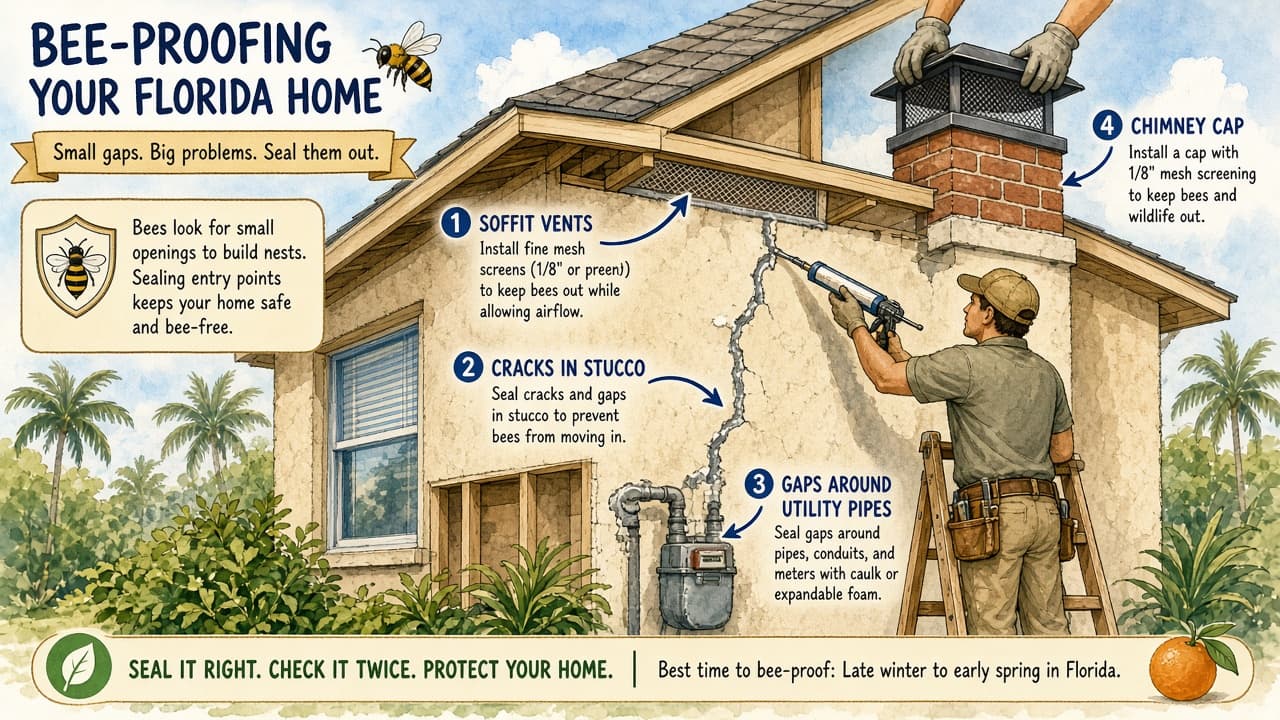
Florida's warm climate makes it a paradise for honey bees—which is wonderful for pollination but not so great when they decide to move into your walls. If you want to learn how to bee proof home and prevent bees in walls, you're in the right place.
At The Other Bee Guy, we remove countless colonies from Florida homes every year. The best way to avoid a costly removal? Stop bees from moving in before they ever start. This guide walks you through practical, proven prevention steps.
Already have bees? See our bee removal services or learn about why bees are swarming your home.
Why Bees Choose Florida Homes
Before sealing anything, it helps to understand what bees want. Honey bee swarms look for enclosed, protected cavities to build their nests—and homes are full of them.
Common reasons bees target Florida houses:
- Abundant nesting cavities (walls, soffits, chimneys)
- Year-round warm climate
- Long swarm season
- Leftover pheromones from previous colonies
- Nearby water and forage
The goal of bee-proofing is to eliminate access to these tempting spaces.
Step 1: Inspect Your Home
To effectively bee proof home, start with a thorough inspection. Walk around your house and look for any gap larger than 1/8 inch—that's all a scout bee needs.
Key Areas to Check
- Soffits and eaves: Look for gaps and separation
- Fascia boards: Check for warping or holes
- Roof line: Inspect where the roof meets walls
- Vents: Attic, gable, and dryer vents
- Utility penetrations: Where pipes, cables, and wires enter
- Chimney: Is it capped?
- Exterior walls: Cracks in stucco, siding gaps
- Windows and door frames: Gaps in caulking
- Water meter and irrigation boxes
Step 2: Seal Entry Points
This is the heart of learning how to prevent bees in walls. Once you've identified gaps, seal them properly.
Materials That Work
- Caulk: For small cracks and gaps
- Expanding foam: For larger voids (then paint/cover)
- Copper mesh or hardware cloth: For vents that need airflow
- Weatherproof sealant: For utility penetrations
- Steel wool: For temporary plugging of odd gaps
Sealing Tips
- Screen all vents with 1/8-inch hardware cloth (never fully block airflow-critical vents)
- Cap your chimney with a proper spark arrestor/cap
- Fill cracks in stucco and masonry
- Seal around all pipes, conduits, and cables
- Repair damaged soffits and fascia promptly
Timing Tip: The best time to bee-proof in Florida is late fall or winter, before spring swarm season begins.
Step 3: Remove Attractants
Even a well-sealed home can attract scouts if attractants remain.
Eliminate Bee Magnets
- Old comb and pheromones: If bees nested before, residual wax and scent attract new swarms. Professional removal includes thorough cleanup.
- Standing water: Fix leaky spigots and manage irrigation
- Open trash: Keep garbage sealed
- Fallen fruit: Clean up under fruit trees
The Pheromone Problem
This is critical: if a colony was removed but the comb and pheromones weren't properly cleaned, your home still "smells" like a great nest site to passing swarms. Always ensure previous nest sites are fully remediated.
Step 4: Maintain Your Home Year-Round
Bee-proofing isn't a one-time task. Ongoing maintenance keeps your defenses strong:
- Re-caulk gaps as they appear
- Repair storm damage promptly (Florida storms open new gaps)
- Keep trees trimmed away from the house
- Re-inspect vents and screens each year
- Watch for scout bee activity during swarm season
Step 5: Know the Warning Signs
Catching bee activity early makes a huge difference. Watch for:
- Scout bees: A few bees repeatedly investigating a hole or gap
- Increased bee traffic around a specific spot
- Buzzing sounds inside walls
- Small dark stains on walls or ceilings (honey/propolis)
- A steady stream of bees entering one location
If you notice bees flying in and out of a hole, they may have already established a colony—contact a professional quickly.
Bee-Proofing Checklist
| Task | Priority |
|---|---|
| Screen attic, gable, and soffit vents | High |
| Cap chimney | High |
| Seal utility penetrations | High |
| Fill stucco/siding cracks | High |
| Repair damaged soffits/fascia | High |
| Fix standing water sources | Medium |
| Remove old comb/pheromones (pro) | High |
| Keep trash sealed | Medium |
| Annual re-inspection | Ongoing |
When to Call a Professional
Some bee-proofing is DIY-friendly, but call an expert when:
- Bees have already moved in (don't seal them in!)
- A previous colony needs proper cleanup
- Entry points are high or hard to reach
- You want a professional inspection before swarm season
- You're not sure where bees are getting in
Critical Warning: Never seal an active bee entrance. Trapped bees will chew through drywall to escape—right into your living space. Remove the colony first, then seal.
Frequently Asked Questions
What size gap can bees fit through?
Bees can enter through gaps as small as 1/8 inch (about the width of a pencil). Seal anything that size or larger.
When should I bee-proof my Florida home?
The ideal time is late fall or winter, before spring swarm season (February–May). This prevents swarms from finding openings.
Can I seal a hole where bees are living?
No! Sealing an active colony traps the bees, and they often chew into your home's interior. Have the colony professionally removed first.
Why do bees keep coming back to the same spot?
Leftover comb and pheromones from a previous colony attract new swarms. The area must be professionally cleaned to remove these attractants.
Does bee-proofing keep out wasps too?
Sealing entry points helps deter many nesting pests, though some wasps build exposed nests. Good home maintenance reduces overall stinging insect problems.
Protect Your Home the Right Way
A little prevention saves you from an expensive, stressful bee removal down the road. If you want peace of mind, The Other Bee Guy can inspect your property, safely remove any existing colonies, and advise on sealing your home for good.
Ready to bee proof home before swarm season? Contact us or call (407) 473-8585. We'll help keep your Florida home safe and bee-free.