
What to Do If You Get Stung by a Bee or Wasp
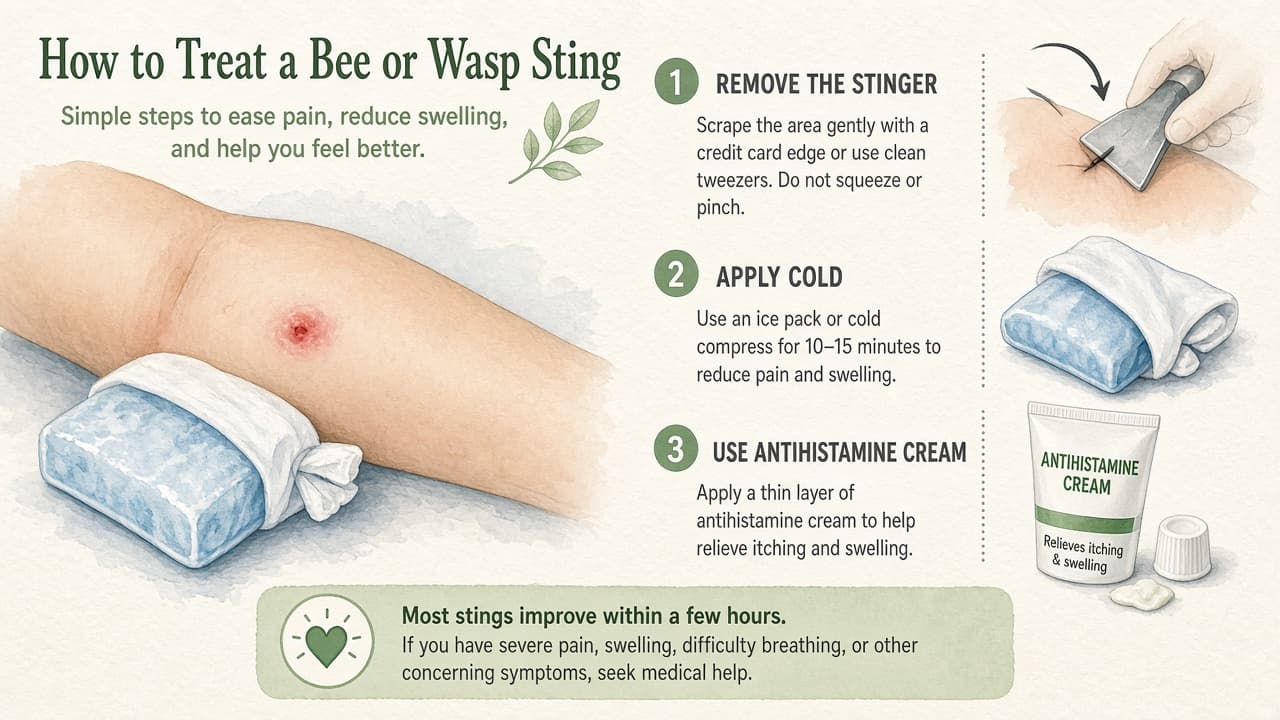
Getting stung is never fun, but knowing the right bee sting treatment can ease the pain, reduce swelling, and help you recognize when a sting is more serious. Whether it's a honey bee, wasp, or hornet, this guide covers exactly wasp sting what to do.
At The Other Bee Guy, we work around stinging insects every day, so we know a thing or two about handling stings. Here's your practical, step-by-step guide.
This article is for general information and is not medical advice. For severe reactions, call 911 immediately.
First, Stay Calm and Move to Safety
If you're stung, the first priority is avoiding more stings:
- Calmly move away from the area—especially if near a nest
- Get indoors or to a safe distance
- Wasps and hornets release alarm pheromones that attract others
- Don't swat wildly, which can provoke more stings
Once you're safe, you can treat the sting.
Bee Sting vs. Wasp Sting: Key Difference
Understanding the difference affects your bee sting treatment:
- Honey bees leave their barbed stinger behind (and die). You must remove the stinger.
- Wasps and hornets have smooth stingers—they don't leave one behind and can sting multiple times.
So if you were stung by a honey bee, step one is removing that stinger fast.
Step-by-Step Sting Treatment
1. Remove the Stinger (Bee Stings)
If a stinger is present, remove it as quickly as possible—the longer it stays, the more venom it releases.
- Scrape it out with a fingernail, credit card edge, or blunt object
- Don't pinch or squeeze (this can push more venom in)
- Work quickly but calmly
2. Wash the Area
Clean the sting site with soap and water to reduce infection risk.
3. Apply a Cold Compress
Use an ice pack or cold cloth for 10–20 minutes to reduce pain and swelling. Wrap ice in a towel—don't apply directly to skin.
4. Reduce Swelling and Itching
- Antihistamine (like Benadryl) for itching and swelling
- Hydrocortisone cream or calamine lotion on the site
- Pain reliever (ibuprofen or acetaminophen) as needed
5. Elevate If Needed
If the sting is on an arm or leg, elevating it can help reduce swelling.
Home Remedies That May Help
For wasp sting what to do at home, these soothing options can help mild stings:
- Baking soda paste: Mix with water and apply to neutralize itch
- Cold honey: Ironically, honey's anti-inflammatory properties may soothe (for external use)
- Aloe vera: Cooling and soothing for the skin
- A cold, damp tea bag: The tannins may help
These won't cure a sting but can ease minor discomfort.
Normal Reactions vs. Warning Signs
Most stings cause a normal local reaction:
- Sharp pain at first
- Redness and swelling around the site
- Itching
- Symptoms fade over hours to a couple of days
Large Local Reactions
Some people get more swelling (several inches around the sting) that peaks at 48 hours. This is uncomfortable but usually not dangerous.
DANGER: Signs of Anaphylaxis
Call 911 immediately if you notice any of these after a sting:
- Difficulty breathing or wheezing
- Swelling of the face, lips, tongue, or throat
- Tightness in the chest or throat
- Rapid or weak pulse
- Dizziness, fainting, or confusion
- Hives spreading beyond the sting site
- Nausea, vomiting, or diarrhea
Life-Threatening Emergency: Anaphylaxis can be fatal within minutes. If someone has a known allergy and an EpiPen, use it and call 911. Don't wait.
When Multiple Stings Are Dangerous
A single sting is rarely dangerous for non-allergic people. But multiple stings deliver more venom and can be serious, especially for:
- Children (smaller body size)
- Elderly individuals
- People with health conditions
- Anyone stung dozens of times
If someone receives many stings, seek medical attention even without an allergic reaction.
How to Avoid Getting Stung
The best bee sting treatment is prevention. To reduce your risk:
- Stay calm around bees—don't swat
- Avoid wearing bright florals or strong fragrances outdoors
- Keep food and sweet drinks covered at picnics
- Wear shoes outdoors (especially near clover and ground nests)
- Don't disturb nests—call a professional instead
- Be cautious with lawn equipment near potential ground nests
If you have stinging insects on your property, don't risk repeated stings. Our team handles bee removal and can advise on wasps and hornets too.
Frequently Asked Questions
How do I remove a bee stinger?
Scrape it out sideways with a fingernail or credit card edge as quickly as possible. Avoid pinching it, which can release more venom.
How long does a bee sting last?
Most stings cause pain and swelling that fades within a few hours to two days. Large local reactions can take up to a week to fully resolve.
When should I see a doctor for a sting?
Seek immediate help for signs of allergic reaction (trouble breathing, facial swelling, dizziness), multiple stings, or if a sting shows signs of infection.
Does toothpaste or baking soda help a sting?
A baking soda paste may help soothe itching. Evidence for toothpaste is anecdotal, but baking soda and cold compresses are more reliable.
Can a wasp sting more than once?
Yes. Unlike honey bees, wasps and hornets have smooth stingers and can sting repeatedly, which is why moving away quickly is important.
Dealing With Stinging Insects on Your Property?
If you're getting stung because of a nest near your home, treating the stings is only half the battle—you need to address the source. The Other Bee Guy provides humane bee removal and can help with wasp and hornet situations across the Orlando area.
Learn more about local species in our Florida stinging insects guide, or contact us at (407) 473-8585 for help keeping your family safe.