
The Ultimate Carpenter Bee Guide
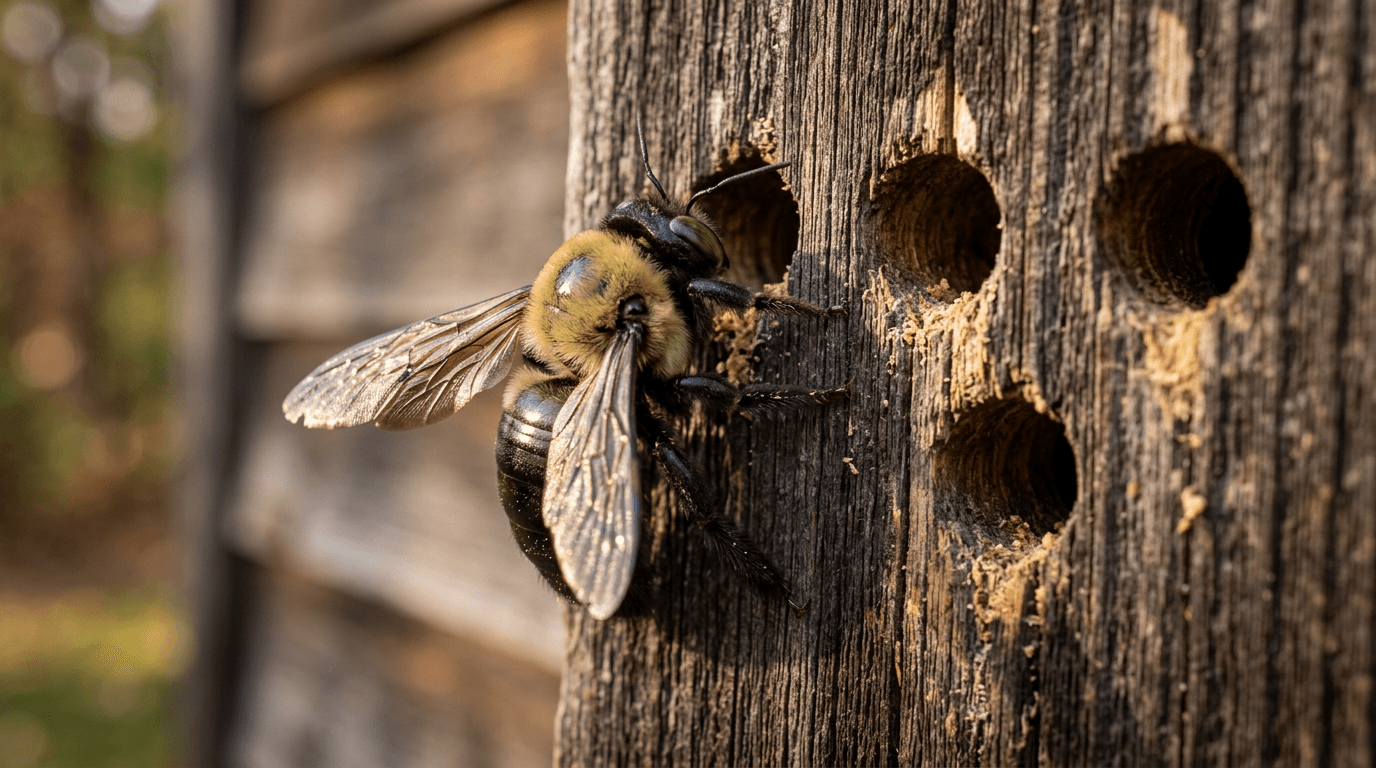
If you've noticed perfectly round, half-inch holes in your deck railings, eaves, or fascia boards — and a few large black bees hovering nearby — you're dealing with carpenter bees. This guide is everything we've learned about them after more than a decade of calls across Central Florida: how to identify them, how much damage they really cause, how to stop it, and how to do it all without killing one of the most important native pollinators in the state.
At The Other Bee Guy, we take a humane-first approach to every bee species we encounter — even the ones that chew through your wood siding. As Florida-certified beekeepers serving the greater Orlando area, our job is to help you protect your home and the pollinators that keep our ecosystem running. If you need help now, reach out through our contact page or call (407) 473-8585. Otherwise, let's dig in.
For a broader look at bee removal in the area, see our Complete Guide to Bee Removal in Orlando.
What Is a Carpenter Bee?
Carpenter bees (genus Xylocopa) are large, solitary native bees that tunnel into wood to build nesting chambers for their young. They're one of the most misidentified bees in Florida — often mistaken for bumblebees because of their size and yellow-black coloring.
Unlike honey bees, carpenter bees:
- Don't form colonies. Each female is a queen who builds her own tunnel and raises her own brood.
- Don't produce honey. They store pollen balls for their larvae instead of nectar.
- Don't live in large groups. You might see several bees around the same structure, but each one has its own tunnel.
- Rarely sting. Males can't sting at all. Females can but almost never do.
- Are important native pollinators. They "buzz pollinate" flowers (especially tomatoes, eggplants, and blueberries) in ways honey bees can't.
In Florida, the most common species is the Eastern carpenter bee (Xylocopa virginica) — shiny black abdomen, fuzzy yellow thorax, body length about one inch.
For a deep dive on behavior and lifecycle, see our post on carpenter bee identification and behavior.
Carpenter Bee vs. Bumblebee — How to Tell the Difference
The two most commonly confused bees in Florida. Both are large, both are yellow and black, both buzz loudly. Here's how to tell them apart:
| Trait | Carpenter Bee | Bumblebee |
|---|---|---|
| Abdomen | Shiny, bald, black | Fuzzy, hairy, striped yellow and black |
| Nesting | Tunnels in wood | Ground nests, abandoned rodent burrows, cavities |
| Social structure | Solitary | Small colonies (50–400) |
| Behavior around humans | Males hover and dive-bomb (no sting) | Generally calm unless nest is disturbed |
| Damage to property | Yes — wood tunneling | No — structural damage |
| Makes honey | No | Small amounts, not harvested |
| Florida status | Very common | Common but less often seen |
For more on distinguishing them, read our full post on carpenter bees vs. bumblebees. If you suspect bumblebees instead, check out what bees nest in the ground.
How to Spot a Carpenter Bee Infestation
Carpenter bees leave distinctive signs. If you see any of these, you have them — and you'll likely see more next year if you don't act.
1. Perfectly Round Entry Holes
The signature evidence. Carpenter bee entry holes are:
- About ½ inch in diameter (roughly the size of your pinky finger)
- Perfectly round, as if drilled with a spade bit
- Usually on the underside of wooden surfaces — fascia, deck rails, eaves, porch ceilings, pergolas
- Often in unpainted, weathered softwood — cedar, pine, redwood, cypress
2. Sawdust Below Entry Points
A small pile of fine sawdust (called "frass") on the ground or on surfaces below a hole is a dead giveaway. The frass may also contain yellowish streaks — that's carpenter bee waste.
3. Staining on Siding and Walls
Streaks of yellow-brown staining running down from an entry hole. This is a combination of frass and pollen debris, and it intensifies during active nesting season.
4. Hovering Males in Early Spring
In Central Florida, peak activity runs March through July. Males patrol near entry holes, hovering and dive-bombing anything that passes. It looks aggressive, but they cannot sting — it's pure bluff behavior.
5. Woodpeckers at Your House
Woodpeckers eat carpenter bee larvae. If you suddenly have woodpeckers hammering on fascia, siding, or rails — particularly in summer — you likely have carpenter bees inside. The woodpecker damage is usually worse than the bee damage.
How Much Damage Do Carpenter Bees Actually Cause?
This is where most articles overreact. Let's be honest about it.
In Year One
A single female tunnels about 4–6 inches into the wood, then turns 90 degrees and excavates another 4–8 inches along the grain. One tunnel. One brood chamber. Cosmetic damage, but nothing structural.
In Year Three to Five
Female offspring often return to the same wood to build their own tunnels — frequently extending the parent's tunnel rather than drilling a new one. After several seasons, a single piece of fascia or rail can have tunnels 2–3 feet long with multiple branches. This is where real structural weakening starts.
In Year Seven and Beyond
Unaddressed carpenter bee damage becomes serious:
- Weakened deck railings and pergolas that can snap under load
- Compromised fascia boards that let water infiltrate the roof structure
- Honeycombed beams in unfinished porches and outbuildings
- Secondary water damage from moisture entering tunnel systems
- Woodpecker damage that often exceeds the bee damage
For detail on how to stop this progression, see our guide to carpenter bee wood damage prevention.
Should You Kill Carpenter Bees?
Short answer: no. Long answer: it's almost never necessary, rarely effective, and it removes a native pollinator that Florida's ecosystem depends on. Carpenter bees are the primary pollinators of several fruit and vegetable crops — especially blueberries, which we cover in our blueberry bees pollination guide.
The real goal isn't to kill carpenter bees. It's to get them out of your wood and keep them out — without ending the species on your property.
This is the same principle we apply to every other bee: humane resolution first, chemical intervention only as a last resort. See bee removal vs. extermination for our full philosophy.
The Humane Carpenter Bee Removal Plan
Here's the approach we recommend to Orlando homeowners, in order.
Step 1 — Wait for the Right Season
The best time to address carpenter bee holes is late fall through early spring (October–February), when tunnels are either empty or contain only overwintering adults. Treating active tunnels with brood inside means killing next year's pollinators.
Step 2 — Plug the Tunnels
Once the season is right:
- Stuff a small amount of steel wool into each hole
- Seal over it with wood filler, caulk, or a wooden dowel and glue
- Sand smooth and paint/stain to match
Steel wool is critical — adult bees can chew through caulk or wood filler alone. They can't chew through steel wool.
Step 3 — Paint or Stain Exposed Wood
Carpenter bees strongly prefer unfinished, weathered softwood. A fresh coat of paint, solid stain, or polyurethane dramatically reduces their interest. Natural oils and clear sealers help but aren't as effective as paint.
Step 4 — Offer an Alternative
This is the humane trick most homeowners miss. Install carpenter bee houses — pre-drilled blocks of wood hung away from your home — in a sunny spot near your garden. Female carpenter bees will preferentially use existing tunnels over drilling new ones. Combined with sealed entry points on your house, this redirects the population instead of eliminating it.
Step 5 — Try a Natural Repellent
For active spots, spray or wipe a natural deterrent. Our natural citrus carpenter bee repellent post covers an effective DIY recipe, and peppermint oil works well too.
Step 6 — Call a Professional for Heavy Infestations
If you have dozens of holes across multiple structures, significant wood damage, or bees inside a second-story structure you can't safely access, it's worth calling us. We handle carpenter bee exclusion, structural assessment, and wood repair across the Orlando area.
For an expanded version of this plan, see our carpenter bee removal guide and how to get rid of carpenter bees.
Carpenter Bee Prevention — Long-Term Strategy
The best way to handle carpenter bees is to make your home unattractive to them in the first place.
Choose the Right Wood
When building or replacing exterior structures:
- Avoid: Unfinished pine, cedar, cypress, redwood, fir
- Prefer: Hardwoods (oak, maple) for decks and rails, composite decking, aluminum fascia
- Always: Prime and paint/stain every exposed wood surface
Protect High-Risk Areas
Focus prevention on the spots carpenter bees target most:
- Fascia and soffit boards
- Deck railings and posts
- Pergolas, arbors, and trellises
- Porch ceilings
- Wooden fence posts
- Outdoor furniture
- Wooden play structures
Seasonal Maintenance
- February: Inspect all exterior wood for new holes before peak season starts
- March–June: Monitor weekly during peak activity; plug new holes as soon as the tunnel is vacated
- July–September: Continue monitoring, touch up paint on any weathered spots
- October–January: Complete any major sealing, repainting, or wood replacement
For an in-depth prevention checklist, read our carpenter bee prevention guide.
When a DIY Approach Isn't Enough
Call a professional if you're dealing with:
- Extensive woodpecker damage exposing large tunnel networks
- Compromised structural wood (soft, hollow-sounding, or bowing fascia/rails)
- Infestations on second-story fascia or roof trim you can't safely access
- Multiple dozens of active holes across a single property
- Bees entering your home's interior through carpenter bee tunnels that connected to wall cavities
- You simply don't have time to manage it seasonally on your own
Our team handles inspection, treatment, exclusion, and repair referrals across greater Orlando. When you're ready, get in touch through our contact page.
Carpenter Bees and Florida's Pollinator Ecosystem
It's worth zooming out. Carpenter bees pollinate a huge range of native and agricultural plants in Florida:
- Blueberries (a $70M+ industry in Florida)
- Tomatoes, eggplants, peppers
- Passionflower, wisteria, salvia
- Many native wildflowers
They buzz-pollinate — gripping a flower and vibrating their flight muscles to release pollen that other bees can't access. Honey bees can't do this. Bumblebees can, but are less common in much of Central Florida. Carpenter bees are a keystone species for our native plants.
This is why our goal is always redirect, don't exterminate. Protect your wood. Give them somewhere else to nest. Let the population continue doing its job away from your siding. For more on bee diversity in the region, see our Florida bugs that sting guide.
Frequently Asked Questions
Do carpenter bees sting?
Males can't sting at all — they don't have stingers. Females can sting but almost never do unless physically handled. In over a decade of carpenter bee work across Central Florida, we've been stung by carpenter bees exactly zero times.
Will carpenter bees damage my home's structure?
Over years, yes — especially if new generations return and extend the same tunnels. A single-year infestation is cosmetic. A five- or ten-year infestation can cause real structural problems, especially in fascia boards and deck railings.
What's the fastest way to get rid of carpenter bees?
The fastest effective approach is: plug all existing holes (steel wool + sealant), paint the wood, and install a carpenter bee house as a decoy. This combination typically resolves the issue within a single season.
Why do carpenter bees keep coming back?
Three reasons: (1) existing tunnels weren't fully sealed, (2) the wood is unpainted or weathered and highly attractive, or (3) a new generation emerged from tunnels you didn't know about. Systematic inspection and sealing during the off-season solves this.
Do carpenter bees pollinate?
Yes — and they're one of the most important pollinators in Florida for blueberries, tomatoes, eggplants, and many native flowers. This is the main reason we recommend humane exclusion over extermination.
Can I use insecticide dust in the holes?
Technically yes, and some pest control companies do this. But it kills brood (including future pollinators), doesn't address the underlying attractiveness of your wood, and often just moves the problem to the next board over. Plugging holes and painting is more effective long-term and doesn't harm the population.
How much does professional carpenter bee removal cost?
It varies with the severity of the infestation, the access required, and whether structural repair is needed. Small jobs are often a few hundred dollars; large multi-structure exclusions on older homes can run higher. We provide a clear estimate after an inspection.
Related Articles
- Carpenter Bee Identification and Behavior
- Carpenter Bee Prevention
- Getting Rid of Carpenter Bees Guide
- How to Get Rid of Carpenter Bees
- Identifying Carpenter Bees vs. Bumblebees
- Natural Citrus Carpenter Bee Repellent
- Stop Carpenter Bee Wood Damage
- Bee Houses for Carpenter Bees
Need Help With Carpenter Bees in Orlando?
Whether you're looking at a handful of fresh holes in your deck or a decade of damage in your fascia boards, The Other Bee Guy can help you plan a humane, effective response. We've handled carpenter bee work across Orlando, Winter Park, Lake Nona, Kissimmee, Altamonte Springs, and the surrounding Central Florida communities.
Call (407) 473-8585 or request an inspection online. We'll assess your situation, give you an honest plan, and protect both your home and Florida's native pollinators.