
What Bees Nest in the Ground? Identification & Behavior
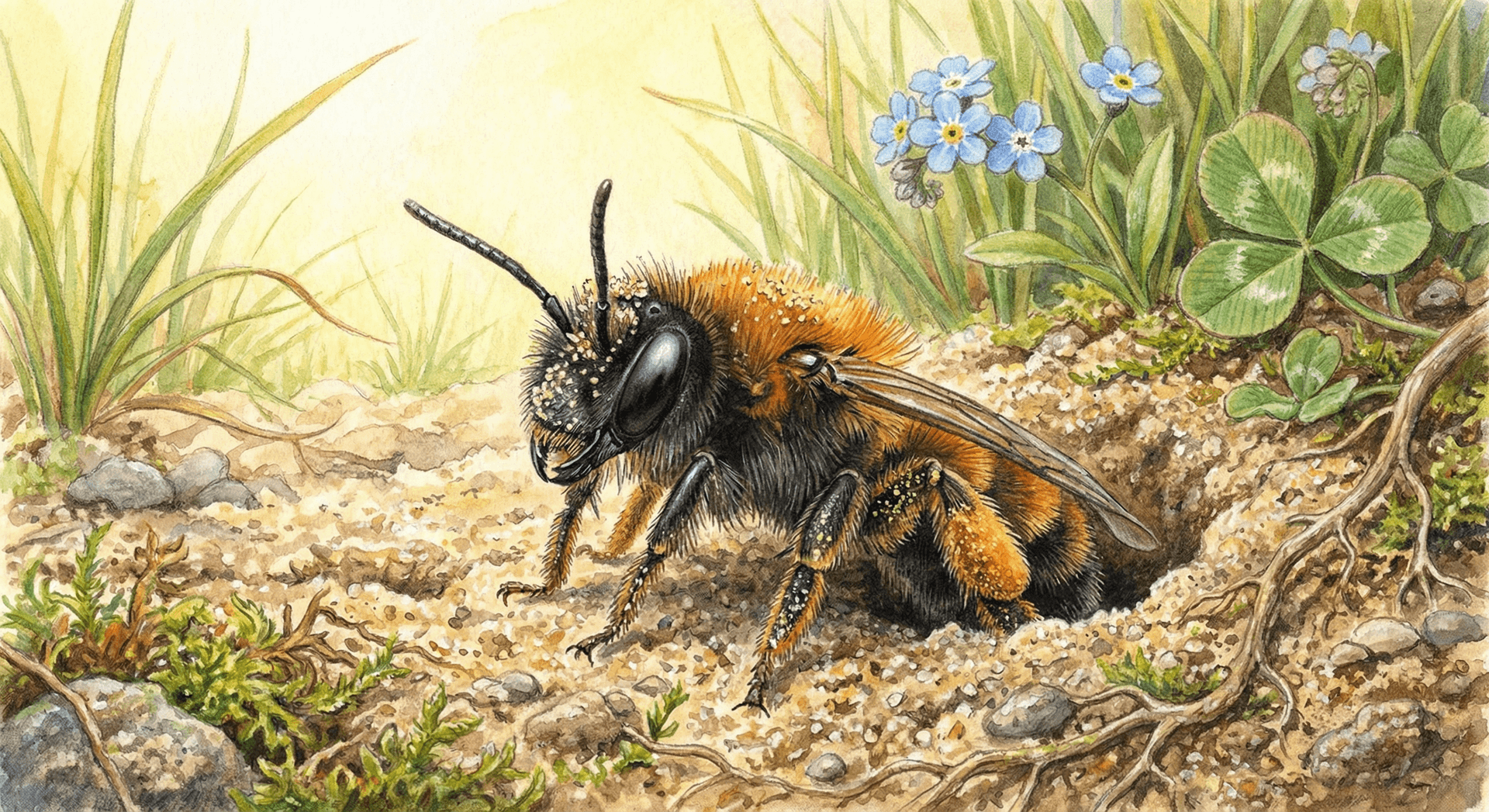
Walking across your lawn, you might be surprised to see small mounds of dirt or bees emerging from holes in the soil. It’s a common sight, but it often leads to the question: what bees nest in the ground?
While we often think of bees living in hives hanging from trees, a large percentage of bee species actually make their homes underground. Understanding which bees these are—and how long do ground bees stay—is key to knowing whether you need to worry or just let them be.
What Bees Nest in the Ground?
There are several types of bees that prefer subterranean living. Here are the most common ones you might encounter:
1. Mining Bees (Andrenidae)
These are solitary bees that appear in early spring. They look a bit like honeybees but are often smaller and darker. Each female digs her own tunnel to lay eggs, though they often nest close together in "aggregations," making it look like a colony. They are extremely docile and rarely sting.
2. Bumblebees (Bombus)
Unlike solitary bees, bumblebees are social and live in colonies. They often take over abandoned rodent burrows or nest in thick grass clumps. Because they have a colony to defend, bumblebees can be defensive if their nest is disturbed.
3. Sweat Bees (Halictidae)
These small, often metallic-colored bees are attracted to human sweat (hence the name). Most are ground nesters and are generally harmless unless squeezed or swatted.
4. Digger Bees (Anthophorini)
Similar to mining bees, digger bees are solitary and build nests in the soil. They are fast fliers and beneficial pollinators.
How Long Do Ground Bees Stay?
If you are worried about your lawn, you’re probably wondering: how long do ground bees stay?
The answer depends on the type of bee, but for most solitary ground bees, the activity is very short-lived.
- Solitary Bees (Mining/Digger Bees): The adult bees are usually active for only 4 to 6 weeks in the spring or early summer. Once the female has laid her eggs and provisioned the nest with pollen, she dies. The larvae develop underground and won't emerge until the following year.
- Bumblebees: A bumblebee colony lasts for one season (spring through late fall). The colony grows throughout the summer and dies off in the winter, with only the new queens surviving to hibernate elsewhere. They will not reuse the same nest next year.
So, in most cases, the "infestation" is temporary. If you can wait a few weeks, the problem often solves itself.
Are Ground Bees Dangerous?
For the vast majority of what bees nest in the ground, the danger is minimal.
- Solitary bees are non-aggressive. Males cannot sting at all, and females only sting if their life is threatened (like being stepped on barefoot).
- Bumblebees are the exception. Since they are social, they will defend their nest. If you find a bumblebee nest in a high-traffic area, you should exercise caution.
Managing Ground Bees
If you have ground bees, here is what we recommend:
- Leave Them Alone: If they are solitary bees and not in a direct walking path, the best approach is tolerance. They are excellent pollinators and will be gone soon.
- Water Your Lawn: Ground bees prefer dry, sandy soil. Regular watering can make the soil less attractive for nesting.
- Thicken Your Turf: Bees look for bare patches of dirt. maintaining a healthy, thick lawn is the best long-term prevention.
However, if you identify the bees as bumblebees or yellow jackets (which are wasps, not bees, but also nest in the ground) and they are in a dangerous location, professional removal may be necessary.
At The Other Bee Guy, we specialize in identifying and managing bee populations safely. If you aren't sure what bees nest in the ground on your property, contact us for an assessment.