
Africanized Bee Safety for Florida Homeowners
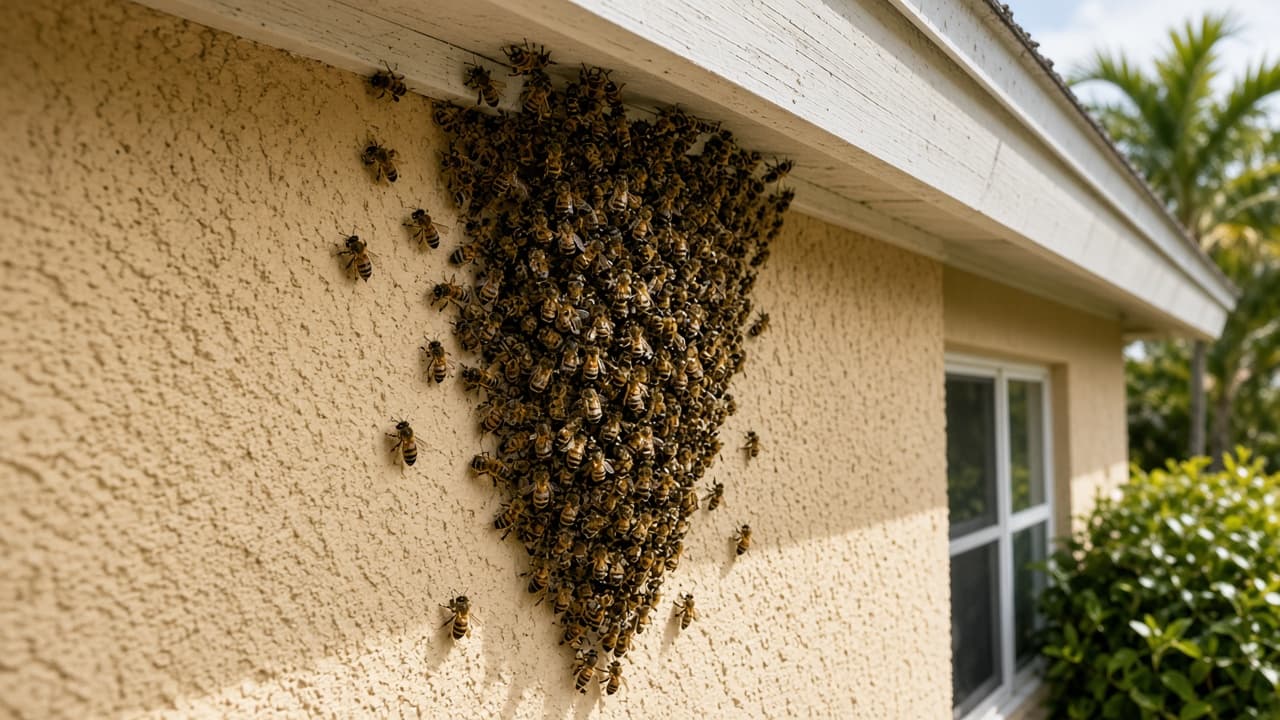
If you live in Central Florida, you've probably heard warnings about Africanized bees—often called "killer bees." While the nickname sounds like something out of a horror movie, the reality is more practical: these bees are established in Florida, they look almost identical to regular honey bees, and knowing basic killer bees safety can keep your family safe.
At The Other Bee Guy, we work with honey bees across the Orlando area every week. Here's what every Florida homeowner should actually know about Africanized bees—without the Hollywood panic.
Think you have an aggressive colony? Don't approach it. Call us at (407) 473-8585 for safe, professional removal.
What Are Africanized Bees?
Africanized honey bees (AHB) are a hybrid of European honey bees and a subspecies from Africa. They were introduced to Brazil in the 1950s and gradually spread north, reaching Florida in the early 2000s. Today they're considered established throughout much of the state.
Here's the key point: Africanized bees are the same species as regular honey bees (Apis mellifera). They pollinate flowers, make honey, and live in colonies just like their European cousins. The difference isn't size or appearance—it's behavior.
Africanized vs. Regular Honey Bees
You cannot reliably tell Africanized bees apart from European honey bees just by looking. They're virtually identical in size and color. Even experts need laboratory analysis to confirm the difference with certainty.
What you can observe is behavior:
| Trait | European Honey Bees | Africanized Honey Bees |
|---|---|---|
| Defensiveness | Generally calm | Highly defensive |
| Response to threats | A few guard bees | Large numbers respond |
| Pursuit distance | Short | Can chase 100+ yards |
| Reaction time | Slower to react | Reacts fast to vibration/noise |
| Nesting sites | Picky, larger cavities | Will nest almost anywhere |
The venom of an Africanized bee is no more toxic than a regular honey bee. The danger comes from the number of stings—because far more bees respond and they pursue threats much farther.
Why Africanized Bees Are More Dangerous
A single Africanized bee sting is no worse than any other bee sting. The risk comes from how the colony behaves as a group:
- They respond in larger numbers. Where a European colony might send a handful of guards, an Africanized colony can send hundreds.
- They react to smaller triggers. Loud noises, vibrations from lawn equipment, or simply walking too close can set them off.
- They stay agitated longer. Once disturbed, they may remain defensive for hours.
- They pursue farther. They can chase a perceived threat the length of a football field or more.
This is why Africanized bees account for the rare but serious cases of people receiving dozens or hundreds of stings.
Where Africanized Bees Nest
One reason Africanized bees are a homeowner concern is that they're far less picky about nesting sites than European honey bees. They'll move into spaces you might never expect:
- Water meter and utility boxes
- Overturned flower pots and buckets
- Old tires and debris piles
- Wall voids, soffits, and chimneys
- Hollow trees and fence posts
- Irrigation valve boxes in the ground
Because they'll nest in small cavities close to the ground and near human activity, encounters are more likely than you'd think. Learn more about why colonies settle on your property in our guide on why bees are swarming your Orlando home.
Warning Signs of an Aggressive Colony
If you notice any of the following, treat the colony as potentially Africanized and keep your distance:
- Bees that fly at you aggressively when you're still 10–15 feet away
- A colony that reacts to lawn mowers, trimmers, or loud equipment
- Large numbers of bees pouring out when the nest is disturbed
- Bees that continue to pursue you as you walk away
- A nest in an unusual, low, or enclosed location
You don't need to confirm whether bees are Africanized to stay safe. If a colony is behaving defensively, treat it as dangerous and call a professional.
What to Do If You Encounter Africanized Bees
If you stumble onto an aggressive colony, your response in the first few seconds matters:
1. Run—Don't Freeze
Get away as fast as you can in a straight line. Unlike wasps, you cannot wait them out by standing still.
2. Cover Your Face
Protect your head, eyes, and nose with your shirt or arms as you run. Bees target the face and head.
3. Get Indoors or in a Car
Run to a building or vehicle and close it. A few bees may follow you inside, but far fewer than remain outside.
4. Don't Jump in Water
A common myth is to dive into a pool. Africanized bees will wait for you to surface. Keep running to shelter instead.
5. Don't Swat
Swatting and flailing only provokes more stings. Focus on getting away and covering your face.
Once you're safe, if you've been stung multiple times, remove stingers by scraping and watch for signs of a reaction.
When It's a Medical Emergency
Call 911 immediately if someone has been stung many times, or shows any signs of a severe reaction: difficulty breathing, swelling of the face or throat, dizziness, nausea, or a rapid pulse. Multiple stings can be dangerous even for people who aren't allergic—especially children, the elderly, and pets.
For a full breakdown of sting symptoms and treatment, see our guide on what to do if you get stung by a bee or wasp.
Why You Should Never DIY an Africanized Removal
It's tempting to grab a can of spray or try to knock down a nest yourself, but with a potentially Africanized colony this is genuinely dangerous:
- Disturbing the nest triggers a mass defensive response. You could receive hundreds of stings in seconds.
- Spraying rarely kills the whole colony and leaves agitated survivors.
- Dead colonies in walls leave comb and honey that rot, attracting pests and new swarms.
- You may trap bees inside a wall, driving them into your living space.
Professional removal uses protective equipment, proper technique, and experience reading colony behavior. We handle humane bee removal and know how to manage defensive colonies safely. If the situation is urgent, our emergency bee removal service is built for exactly this.
How to Prevent Africanized Bees From Nesting
The best defense is making your property less inviting:
- Seal openings. Fill gaps and cracks in walls, soffits, and around utility penetrations larger than 1/8 inch.
- Cover vents and openings with fine mesh screen.
- Remove clutter. Clear out old tires, pots, buckets, and debris where bees could nest.
- Fill tree cavities and hollow fence posts.
- Inspect quarterly. Walk your property and check sheds, meter boxes, and eaves for early activity.
For a complete prevention plan, read our guide on how to bee-proof your home in Florida.
Frequently Asked Questions
Are there really killer bees in Florida?
Yes. Africanized honey bees are established across much of Florida. They're the same species as regular honey bees but are more defensive, which is where the "killer bee" nickname comes from.
Can I tell if bees are Africanized just by looking?
No. They're virtually identical to European honey bees in appearance. Only laboratory testing confirms it. Judge by behavior instead—aggressive, large-scale defensiveness is the warning sign.
Are Africanized bee stings more poisonous?
No. Their venom is the same as other honey bees. The danger is the number of stings, because many more bees respond and they pursue threats farther.
What should I do if I find a colony in my yard?
Keep people and pets away, don't disturb it, and call a professional. Avoid making noise or vibrations near the nest, and never try to spray or remove it yourself.
Do Africanized bees make honey?
Yes. They produce honey and pollinate just like European honey bees. Beekeepers and removal experts can relocate them, which is why humane removal is still the goal whenever it's safe.
Stay Safe—Let a Professional Handle It
Africanized bees are a real part of living in Florida, but with the right knowledge they're manageable. The golden rule is simple: if a colony is behaving aggressively, don't approach it and don't DIY it.
The Other Bee Guy provides safe, humane bee removal across the Orlando area, including defensive and emergency colonies. Learn to identify local species in our Florida stinging insects guide, or contact us at (407) 473-8585 and we'll help you handle it safely.