
Mud Daubers in Florida: Harmful or Helpful?
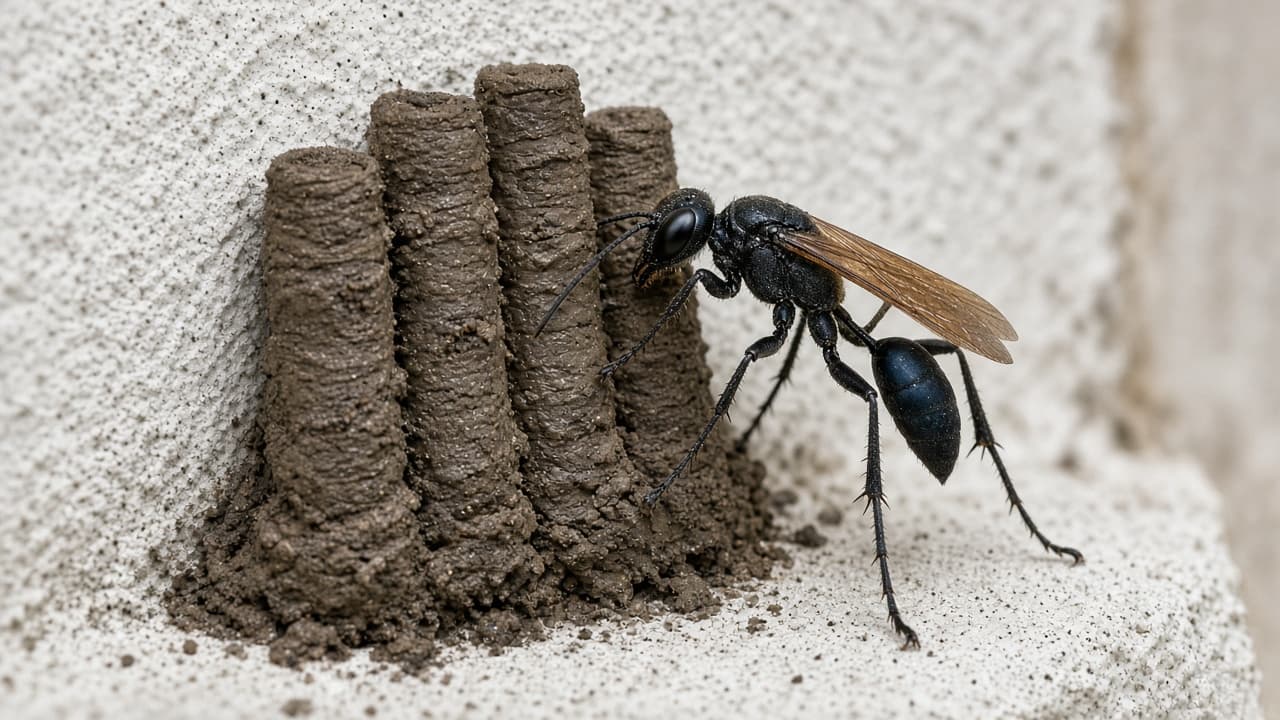
Notice a cluster of tube-shaped mud nests on the side of your house, shed, or under an eave? You're likely looking at the handiwork of mud daubers. These slender wasps are one of the most misunderstood stinging insects in Florida—they look intimidating, but they're among the most harmless wasps you'll encounter.
At The Other Bee Guy, we regularly get calls about mud daubers in Florida, and the first thing we tell homeowners is usually reassuring. Here's what you need to know about identifying them, whether they're dangerous, and when mud dauber removal actually makes sense.
Not sure what you're dealing with? Contact us at (407) 473-8585 and we'll help you identify it.
What Are Mud Daubers?
Mud daubers are solitary wasps named for the mud nests they build. Unlike paper wasps or yellow jackets, they don't live in large colonies. Each female builds and provisions her own nest alone, without workers to defend it.
Several types are common in Florida, including the black-and-yellow mud dauber and the metallic blue mud dauber. All share the same general lifestyle: a single female hunts spiders, paralyzes them, and seals them inside mud chambers as food for her developing larvae.
That's right—mud daubers are natural spider control. A single nest can hold dozens of spiders.
How to Identify Mud Daubers
Mud daubers have a very distinctive appearance:
- Long, slender body, typically 0.5 to 1 inch
- An extremely thin, thread-like waist connecting the thorax and abdomen
- Coloration that's black, black-and-yellow, or a shiny metallic blue depending on species
- Long legs that may dangle in flight
- Relatively slow, non-aggressive flight
The Nest Is Unmistakable
The surest way to identify mud daubers is their nest:
- Made of dried mud, not paper
- Tube-shaped (like organ pipes) or a smooth plastered lump
- Usually 1–2 inches long per tube, grouped together
- Found on sheltered vertical surfaces: walls, eaves, sheds, garages, under porches, and in attics
- No visible open comb or papery shell
If the nest is mud, you're dealing with mud daubers—not paper wasps or hornets. See how they compare to other species in our Florida stinging insects guide.
Are Mud Daubers Dangerous?
Here's the reassuring part: mud daubers are among the least dangerous stinging insects.
- They are solitary, so there's no colony to defend and no swarming behavior.
- They are extremely docile and rarely sting, even when their nest is disturbed.
- Their venom is primarily designed to paralyze spiders, not defend against large animals.
- Stings are uncommon and usually mild compared to a yellow jacket or hornet.
Unlike social wasps, mud daubers won't mob you if you walk by their nest. You would essentially have to trap one against your skin to get stung.
Bonus: Because mud daubers hunt spiders—including black widows and brown recluses—they're actually helping keep more dangerous pests in check around your home.
Helpful or Harmful? The Verdict
For most homeowners, mud daubers are beneficial and harmless. They:
- Control spider populations naturally
- Pollinate flowers as they feed on nectar
- Don't damage wood or structures (the mud wipes off)
- Don't form aggressive colonies
The main downsides are cosmetic—mud nests can look unsightly and leave marks on walls—and the fact that abandoned mud dauber nests are sometimes taken over by other insects, including more aggressive wasps. That's really the only practical reason to remove them.
When Does Mud Dauber Removal Make Sense?
Even though they're harmless, there are a few legitimate reasons to remove nests:
- Appearance: Nests on a front wall or entryway look messy
- Indoor nests: Mud daubers sometimes build in attics, garages, or sheds
- Allergies: If someone in your home is highly allergic to wasp stings, caution is reasonable
- Repurposed nests: Old nests can attract other insects once the mud dauber moves on
- Large accumulations: Years of nests building up on a structure
Because mud daubers are so docile, removal is usually simple and low-risk.
How to Remove Mud Dauber Nests
Mud dauber nests are among the easiest stinging-insect nests to deal with:
For Active or Abandoned Nests
- Confirm it's a mud dauber nest (dried mud tubes, no open comb).
- Wait until evening if you want to be cautious, though stings are rare.
- Scrape the nest off with a putty knife or scraper into a bag.
- Wash the surface with soapy water to remove the mud residue.
- Discard the nest in a sealed bag.
That's usually it—no sprays or special equipment required for these gentle wasps.
If You're Unsure of the Species
If there's any chance you've misidentified the nest and it's actually a paper wasp, yellow jacket, or hornet nest, stop and get it identified first. Those species are far more defensive. When in doubt, don't disturb it.
When to Call a Professional
Mud daubers rarely require professional help, but it's worth a call if:
- You can't confirm the species and want to be safe
- There are nests inside your home (attic, wall void, garage)
- Someone has a known wasp allergy
- You're finding other, more aggressive wasps moving into old nests
The Other Bee Guy serves the greater Orlando area and can help you tell harmless mud daubers apart from species that actually need professional removal. We specialize in humane bee removal and can point you in the right direction for any stinging insect.
Preventing Mud Daubers
If you'd rather not have mud nests on your home:
- Wipe down nests early before they multiply
- Repair and seal sheltered nooks where they like to build
- Keep garage and shed doors closed when possible
- Reduce spider populations indoors, since spiders are their food source
- Power-wash walls periodically to remove partial nests
For broader protection against all stinging insects, read our guide on how to bee-proof your home in Florida.
Frequently Asked Questions
Do mud daubers sting?
Rarely. Mud daubers are solitary and extremely docile. They almost never sting unless physically trapped against your skin, and their stings are mild compared to social wasps.
Are mud daubers good to have around?
Generally, yes. They prey on spiders—including dangerous ones like black widows—and help with pollination. For most homeowners they're beneficial and harmless.
Will mud daubers damage my house?
No. They don't bore into wood or cause structural damage. Their mud nests are only a cosmetic issue and wipe or scrape off easily.
Why do I keep getting mud dauber nests in the same spot?
Sheltered, undisturbed vertical surfaces are ideal nesting sites. Removing nests promptly and sealing or disrupting those spots discourages repeat building.
Should I worry about wasps in old mud dauber nests?
Sometimes. Abandoned mud nests can be reused by other insects, including more aggressive wasps. If you notice different, more defensive wasps around old nests, have them identified.
Identify It Before You Remove It
Mud daubers are proof that not every wasp is a threat—in fact, these gentle spider-hunters do you a favor. The key is correct identification, because mistaking a mud dauber for a more aggressive species (or vice versa) changes everything.
The Other Bee Guy helps Orlando-area homeowners identify and handle stinging insects safely. Learn the differences in our Florida stinging insects guide, or contact us at (407) 473-8585 if you'd like a hand.