
The Complete Guide to Florida Honey
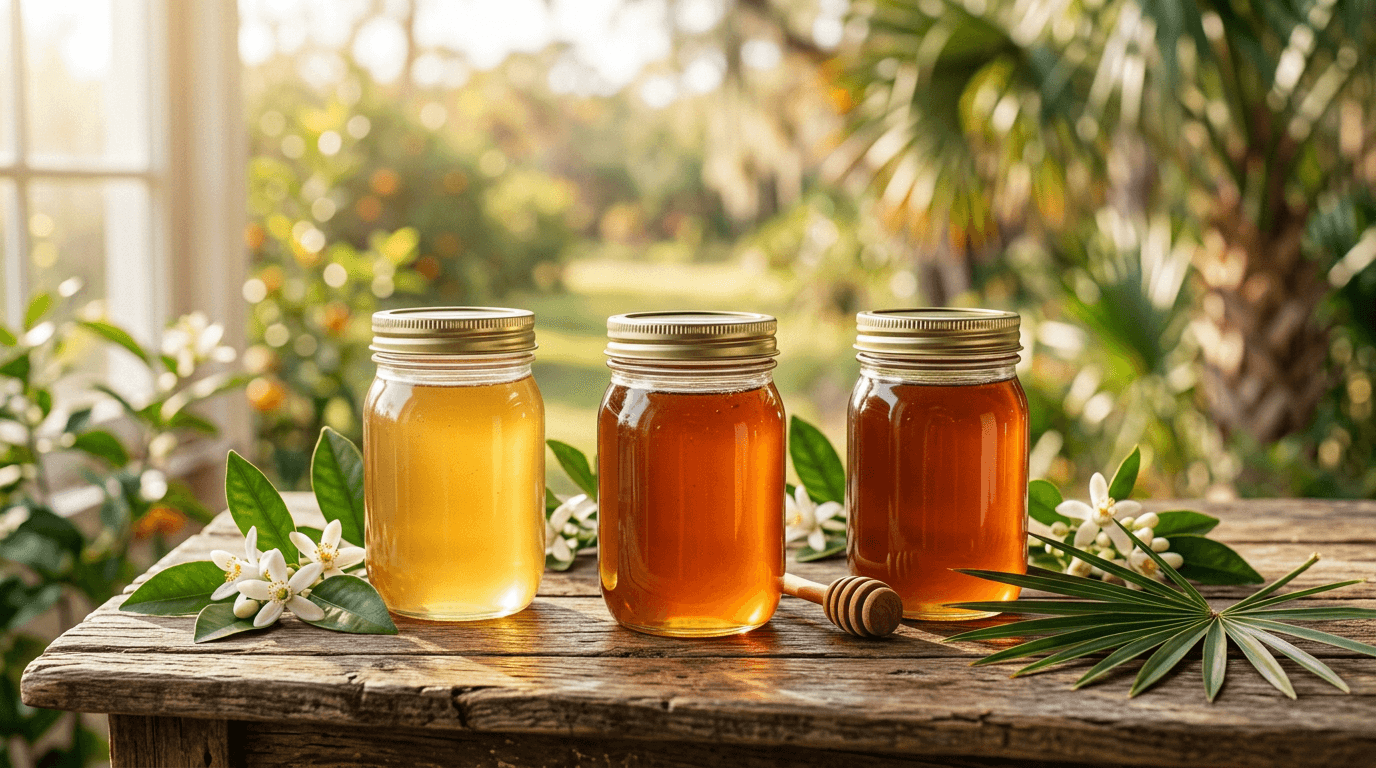
Florida produces some of the most distinctive honey in the world. Our subtropical climate, agricultural diversity, and year-round bloom calendar give Florida beekeepers access to nectar sources that don't exist anywhere else — citrus groves, saw palmetto scrub, mangrove coasts, gallberry wetlands, and Tupelo swamps. If you've only ever eaten generic supermarket honey, you've barely tasted honey at all.
This guide covers everything we wish every Central Florida home cook, honey shopper, and curious eater knew about Florida honey — the main varietals, how to tell real honey from fake, the health claims that are and aren't backed by evidence, and how to get your hands on the good stuff. At The Other Bee Guy, we harvest local raw honey from colonies we've relocated through our bee removal and bee relocation services across the Orlando area. Every jar has a story.
What Makes Florida Honey Different
Three things set Florida honey apart from honey produced in other states:
1. Year-Round Production
Most of the country has a single nectar flow, usually late spring. In Central and South Florida, bees forage ten to twelve months out of the year. That means Florida beekeepers can produce multiple distinct honey varietals from the same hives as different plants come into bloom.
2. Unique Nectar Sources
Florida is home to several nectar-producing plants you won't find in commercial quantities anywhere else in the U.S.:
- Orange blossom — from Florida's citrus industry
- Saw palmetto — from native scrub palmetto
- Gallberry — from wetland shrub Ilex glabra
- Tupelo — from Ogeechee tupelo trees in Panhandle swamps (one of the rarest, most prized honeys in the world)
- Mangrove — from coastal mangrove forests
- Brazilian pepper — an invasive but heavy-producing plant in South Florida
3. Varietal Clarity
Because many of these plants bloom in tight windows and produce huge volumes of nectar, Florida beekeepers can harvest true single-varietal honey — not blends labeled by a marketing team. When a Florida beekeeper calls something "orange blossom honey," they've usually pulled the frames the day citrus bloom ended.
For a broader overview of honey types across the country, see our post on types of honey.
The Main Florida Honey Varietals
Here's a tasting tour of the honeys most commonly available from Florida beekeepers.
Orange Blossom Honey
Season: Late February through mid-April Color: Light amber to pale gold Flavor: Delicate, floral, faintly citrus, light finish Crystallization: Slow (6–12 months)
Florida's most famous honey. Produced during citrus bloom in groves across the Ridge, the Indian River, and the rapidly disappearing groves of Central Florida. Crisp, floral, and unmistakably bright — if you've only had "clover honey" your whole life, orange blossom is a revelation. Pairs beautifully with soft cheeses, yogurt, tea, and baked goods where you want the honey flavor to be the star.
Wildflower Honey
Season: Nearly year-round Color: Light to dark amber, varies Flavor: Complex, varies by location and season Crystallization: Moderate
The broadest category — "wildflower" just means the bees foraged on a mix of local plants rather than a single dominant bloom. In Central Florida, a spring wildflower harvest might include orange blossom, Spanish needle, clover, holly, and native meadow plants. Each batch is different, which is exactly the point. Our own wildflower honey is one of the most popular items we sell.
Saw Palmetto Honey
Season: April through June Color: Light amber with a slight greenish-gold tint Flavor: Smoky, buttery, with caramel and herbal notes Crystallization: Moderate
A true Florida original. Saw palmetto is a native scrub plant that blooms heavily in inland pine flatwoods and scrub habitats. Palmetto honey has a flavor profile unlike anything else — often described as buttery, woody, or caramelly, with a long finish. Excellent drizzled over aged cheese, dark bread, or grilled fruit. Beyond the flavor, saw palmetto has longstanding use in traditional medicine, and the honey inherits some of that aromatic complexity.
Gallberry Honey
Season: May through June Color: Light amber, very clear Flavor: Clean, mild, slightly floral Crystallization: Slow — gallberry is one of the slowest-crystallizing honeys in the U.S.
A specialty of northern and central Florida wetlands. Gallberry honey is sometimes called "ink berry honey" after the plant. Its low crystallization rate makes it a favorite for honey sold in squeeze bottles and for high-end baking.
Tupelo Honey
Season: Mid-April through mid-May (2–3 week window) Color: Light gold with a greenish cast Flavor: Buttery, floral, delicate, almost fruity Crystallization: Extremely slow — often 2+ years
Produced only in the Apalachicola River basin in the Florida Panhandle, from Ogeechee tupelo trees growing in swamp water. True tupelo honey is one of the rarest and most expensive honeys in the world, with a narrow harvest window and a very specific terroir. Beekeepers float hives into the swamp on platform barges to catch the bloom. If you can find real tupelo honey, it's worth trying at least once.
Mangrove Honey
Season: Summer Color: Light amber Flavor: Slightly salty-sweet, herbal Crystallization: Slow
A South Florida specialty. Coastal beekeepers near the Everglades and Ten Thousand Islands produce honey from black mangrove bloom. Distinctive and harder to find outside South Florida.
Brazilian Pepper Honey
Season: Fall (October–November) Color: Deep amber Flavor: Rich, spicy, peppery finish Crystallization: Fast
Brazilian pepper is an invasive plant that beekeepers have learned to make the best of. The honey is heavy, complex, and polarizing — some people love the peppery finish, others don't. A defining fall honey in South and Central Florida.
Raw vs. Processed Honey
This is where most supermarket honey falls apart. If it came from a plastic bear on a grocery store shelf, there's a good chance it's been:
- Ultra-filtered — removing pollen grains that would let you trace the honey's origin
- Heated — destroying natural enzymes, subtle flavor compounds, and some antioxidants
- Blended — mixing honey from multiple countries to hit a price point
- Adulterated — in worst cases, cut with corn or rice syrup
Raw local honey is honey that's been minimally processed — strained to remove wax and debris, but never heated above hive temperature, never ultra-filtered, and never blended. It retains its pollen, enzymes, and the full flavor profile of the nectar it came from.
How to tell the difference:
| Indicator | Raw Honey | Processed Honey |
|---|---|---|
| Clarity | Slightly cloudy, may have tiny bubbles or foam | Crystal clear |
| Crystallization over time | Yes, normal and expected | Rarely crystallizes |
| Pollen content | High | Ultra-filtered out |
| Flavor variation between batches | Significant | Uniform |
| Label specificity | "Orange blossom, Polk County, harvested May 2026" | "Honey. Packed in USA." |
| Price | Higher | Lower |
Buying from a local beekeeper is the single most reliable way to guarantee you're getting real, raw honey. We break this down further in our guide on finding a bee farm near you.
Health Benefits of Local Raw Honey — What the Evidence Says
Honey gets credited with everything from curing allergies to fighting cancer. Some claims have real evidence behind them, others don't. Here's an honest breakdown.
Strong Evidence
- Wound healing — Medical-grade honey is FDA-cleared for wound and burn dressings. Raw honey's low pH, hydrogen peroxide content, and high sugar concentration make it naturally antibacterial.
- Cough suppression in children over one year old — Multiple studies show honey outperforms standard cough syrups for nighttime cough relief.
- Sore throat relief — Honey coats and soothes inflamed tissue. A teaspoon in warm tea genuinely helps.
- Antioxidant content — Raw honey contains measurable polyphenols and flavonoids, especially in darker varietals.
Moderate Evidence
- Local pollen and seasonal allergies — This is the classic claim. The evidence is mixed but directionally supportive: eating local raw honey may expose you to trace amounts of local pollen and gently desensitize your immune system over time. It's not a cure, but many of our customers swear by it. It needs to be genuinely raw and genuinely local for this mechanism to work at all.
- Digestive support — Honey contains small amounts of prebiotics and enzymes that may support gut flora.
Weak or No Evidence
- "Honey cures cancer" — No.
- "Honey reverses diabetes" — No. Raw honey has a slightly lower glycemic index than table sugar but is still mostly sugar.
- "Honey removes toxins" — The body has a liver for that.
Who Shouldn't Eat Honey
- Infants under 12 months — risk of infant botulism. Never give any honey, raw or processed, to a baby under one year old.
- People with severe bee or pollen allergies — raw honey contains bee pollen and in very rare cases can trigger reactions.
For more on the pollen-allergy connection, watch for our upcoming post on the health benefits of local raw honey.
How to Shop for Florida Honey
Buy Direct From a Beekeeper
The best way to know what you're getting is to meet the person who harvested it. Local beekeepers, farmers markets, roadside apiaries, and small honey-focused shops almost always carry real raw honey with clear labeling.
In the Orlando area, look for:
- Local farmers markets (Winter Park, Lake Eola, Lake Nona)
- State-certified beekeeper operations (look for a Florida Department of Agriculture certification)
- Roadside stands in agricultural communities east and west of the metro
- Our own local honey — raw wildflower, orange blossom, and saw palmetto honey harvested from colonies we've relocated
Read the Label
A trustworthy label will include:
- The specific varietal (orange blossom, saw palmetto, wildflower, etc.)
- A harvest region or county
- A harvest date or "harvested in [month/year]"
- The beekeeper or apiary's name
- The word "raw," "unfiltered," or "unheated"
A label that says only "Honey. Product of USA." tells you almost nothing.
Test at Home
A few quick tests if you're unsure:
- Crystallization test: Real raw honey crystallizes over months. If a jar has been sitting in your pantry for a year and is still perfectly clear and runny, it may be processed or cut with syrup.
- Water test: Drop a spoonful into a glass of cold water. Real honey sinks and holds its shape briefly. Adulterated honey tends to dissolve quickly.
- Thumb test: A drop of real honey will stay put on your thumb. Adulterated honey runs off.
How Honey Gets Made — A Quick Tour
Understanding what's actually in a jar of raw honey makes it a lot easier to appreciate.
- Foraging bees collect nectar from flowers and store it in a specialized honey stomach
- At the hive, they pass the nectar mouth-to-mouth to house bees, adding enzymes that begin breaking down sucrose into glucose and fructose
- House bees deposit the nectar into wax comb cells
- Bees fan their wings to evaporate water from the nectar — when water content drops below about 18%, it's officially honey
- The cell is capped with wax, sealing the honey in a preserved state that can last literal centuries
- The beekeeper harvests by uncapping the wax and spinning the honey out of the frames in a centrifugal extractor
- The honey is strained through screen to remove bits of wax and debris — and, if it's truly raw, nothing else
If you've been on a removal with us, you've probably seen the beginning of this process inside someone's wall. For more on where our removal bees go, see our post on bee relocation.
Cooking and Baking With Raw Honey
A few rules that help a lot:
- Don't boil raw honey. High heat destroys enzymes and flavor compounds. Use it for finishing, glazing, drizzling, dressings, marinades, and low-temp baking.
- Substitute sparingly in baking. Honey is about 25% sweeter than sugar. Use ¾ cup of honey for every 1 cup of sugar, and reduce other liquids by about 2 tablespoons per cup.
- Lower oven temps by 25°F when substituting honey for sugar — honey caramelizes and browns faster.
- Match the varietal to the dish. Orange blossom for yogurt parfaits and tea cakes. Saw palmetto for aged cheese and grilled stone fruit. Wildflower for vinaigrettes and BBQ glazes. Tupelo for anything where you want honey to be the star.
- Store at room temperature. Don't refrigerate honey — cold accelerates crystallization.
What to Do If Your Honey Crystallizes
Crystallized honey is a sign of quality, not spoilage. All real raw honey will eventually crystallize — some (like tupelo and gallberry) take years, others (like Brazilian pepper or clover) take just weeks.
To re-liquefy:
- Set the jar in a bowl of warm (not boiling) water
- Stir occasionally until the crystals dissolve
- Never microwave — uneven heating destroys enzymes
Or leave it crystallized. Many people prefer the creamy texture of crystallized honey on toast or in tea.
Frequently Asked Questions
Does local honey actually help with allergies?
The evidence is mixed but plausible. The theory — that eating local pollen in trace amounts can desensitize the immune system — has some support, and many long-term customers of ours are convinced. It needs to be genuinely raw, genuinely local, and consumed regularly for months. It is not a replacement for antihistamines in severe cases.
What's the best Florida honey?
There's no single "best." Orange blossom for delicate pairings, saw palmetto for complexity, tupelo for rarity, wildflower for versatility, Brazilian pepper for a fall kitchen. Try several — that's the fun.
How long does raw honey last?
Essentially forever. Honey has been recovered from Egyptian tombs still edible after thousands of years. Store it in a sealed jar at room temperature and it will keep indefinitely — it may crystallize, but it won't spoil.
Is all honey at the grocery store fake?
Not all, but a shocking amount of the cheapest honey on U.S. shelves has been linked to adulteration with syrups or blended with imported honey of questionable origin. The safest bet is to buy from a local beekeeper or a trusted specialty store with transparent sourcing.
Can I feed honey to my dog?
Small amounts of raw honey are generally safe for healthy adult dogs and some owners use it for seasonal allergies. Don't give honey to puppies, diabetic dogs, or dogs with compromised immune systems without a vet's okay.
Where can I buy local Orlando honey?
We carry raw wildflower, orange blossom, and saw palmetto honey harvested from our own relocated colonies. See our local honey page or contact us to arrange pickup.
Why is local honey more expensive than supermarket honey?
Because it's actually honey. Raw local honey is produced in small batches, strained but not processed, and priced to reflect the labor of beekeeping. The cheap honey on supermarket shelves is mass-produced, often imported, and in some cases cut with corn or rice syrup. You get what you pay for.
Related Articles
- Types of Honey
- Finding a Bee Farm Near You
- Blueberry Bees and Pollination Guide
- Bee Dance Communication
- Complete Guide to Bee Removal in Orlando
Try Real Florida Honey — From Orlando's Bee Guy
Every jar of honey we sell comes from a hive we've personally worked — many of them rescued from Orlando homes through our bee removal program. When you buy from us, you're supporting live bee relocation, local pollination, and small-scale Florida beekeeping.
Browse our local honey selection or contact us to pick up a jar. Call (407) 473-8585 for availability, gift boxes, or wholesale inquiries. We serve Orlando, Winter Park, Lake Nona, Kissimmee, Altamonte Springs, and the surrounding Central Florida communities.