
Seasonal Beekeeping Calendar for Central Florida
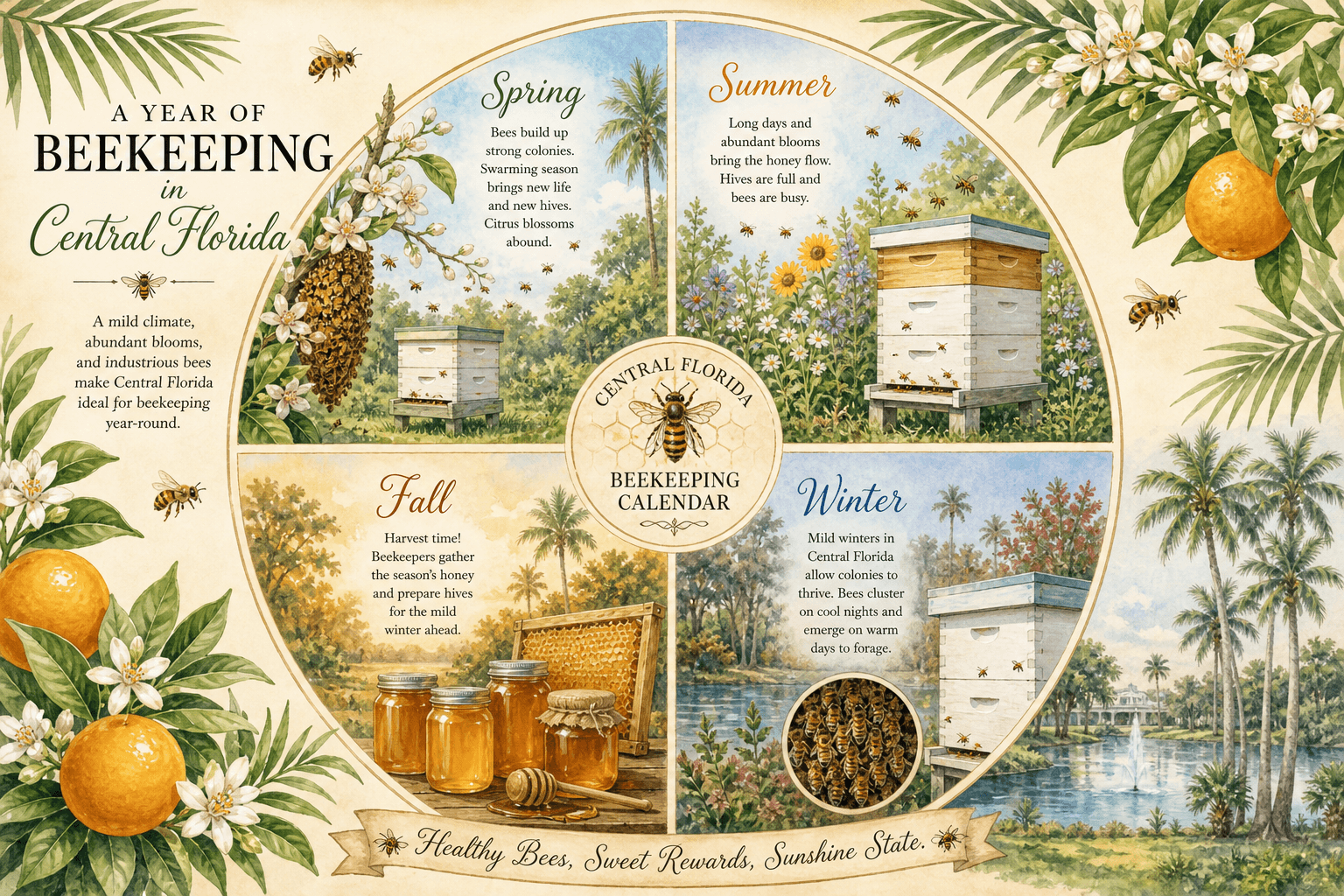
Beekeeping in Central Florida is a year-round endeavor. Unlike northern states where bees go dormant for months, our mild climate keeps colonies active nearly all year. That's why having a reliable beekeeping calendar Florida beekeepers can follow is so important—the work never fully stops.
At The Other Bee Guy, we've managed colonies through every Florida season. In this guide, we'll walk you through a month-by-month plan covering inspections, pest management, feeding, and—everyone's favorite—when to harvest honey.
New to the hobby? Start with our beekeeping for beginners guide before diving into the seasonal schedule.
Why Florida's Calendar Is Different
Central Florida's beekeeping rhythm doesn't match the textbooks written for northern climates. Here's what makes us unique:
- Early nectar flow: Our main flow starts in February/March with citrus and gallberry—much earlier than up north
- Long active season: Bees forage nearly year-round
- Mild winters: No deep dormancy; colonies stay active
- Intense pest pressure: Small hive beetles and Varroa mites breed all year
- Summer dearth: Our toughest season is actually summer, not winter
Understanding these differences is the key to a successful beekeeping calendar Florida plan.
Winter (December – February): Build-Up Begins
While northern beekeepers huddle indoors, Central Florida colonies are already preparing for spring.
December
- Conduct light inspections on warm days
- Ensure adequate honey stores
- Monitor for small hive beetles (they don't quit in winter here)
- Keep entrance reducers on for weak colonies
January
- Queens begin ramping up egg-laying
- Start checking brood patterns
- Begin Varroa mite monitoring
- Consider an oxalic acid treatment while brood levels are low (highly effective now)
February
- Nectar flow begins! Citrus and maple start blooming
- Add space as colonies expand
- Watch for early swarm preparations
- Ensure each hive has room to grow
Spring (March – May): Peak Season & Swarm Watch
Spring is the busiest and most exciting time on any beekeeping calendar Florida beekeepers follow.
March
- Main nectar flow in full swing (orange blossom, gallberry)
- Add honey supers
- Inspect weekly for swarm cells
- Perform swarm-prevention splits if needed
- This is prime swarm season—stay vigilant
April
- Continue swarm management
- Monitor honey super fill rate
- Add more supers as needed
- Keep up with mite monitoring
May
- First honey harvest window for spring honey
- Extract capped frames (orange blossom is prized!)
- Watch for the transition toward summer dearth
- Re-queen colonies with poor performance
Pro Tip: Spring swarm season overlaps with peak removal calls. If you spot a swarm on your property, check our swarm season guide or contact us.
Summer (June – August): The Florida Dearth
Surprise—summer is the hardest season for Florida bees. The intense heat and reduced blooming create a "nectar dearth."
June
- Summer dearth begins
- Monitor food stores closely
- Provide ventilation (this is critical in Florida heat)
- Ensure a constant water source within 50 feet
- Watch for robbing behavior between hives
July
- Continue monitoring stores; feed if necessary
- Heavy small hive beetle pressure—use traps
- Reduce entrances on weak hives to prevent robbing
- Provide shade if hives are in full sun
August
- Peak Varroa mite levels—test and treat
- Continue beetle management
- Keep colonies cool and ventilated
- Hurricane prep: secure hives with ratchet straps
Fall (September – November): Recovery & Prep
As temperatures ease, colonies recover and a secondary nectar flow appears.
September
- Fall nectar flow (Spanish needle, Brazilian pepper)
- Add supers if flow is strong
- Continue mite treatments
- Stay alert during peak hurricane season
October
- Possible second honey harvest (Brazilian pepper honey)
- Begin reducing hive space as population drops
- Final mite treatments before winter brood
- Combine weak colonies
November
- Prepare colonies for the mild winter
- Ensure adequate honey stores remain
- Reduce entrances
- Final beetle trap checks
When to Harvest Honey in Central Florida
The #1 question we hear: when to harvest honey? In Central Florida, you have two main windows:
| Harvest | Timing | Honey Type |
|---|---|---|
| Spring | April–May | Orange blossom, gallberry, wildflower |
| Fall | October–November | Brazilian pepper, Spanish needle |
Signs Honey Is Ready to Harvest
- Capped comb: At least 80% of the frame should be capped with wax
- Shake test: No nectar drips out when you shake the frame
- Moisture content: Below 18.6% (use a refractometer)
Never harvest unripe honey—it can ferment. And always leave enough honey for the bees, especially heading into summer dearth.
Quick-Reference Annual Calendar
| Month | Key Tasks |
|---|---|
| Dec | Light inspections, beetle checks |
| Jan | Oxalic acid treatment, mite monitoring |
| Feb | Nectar flow begins, add space |
| Mar | Add supers, swarm watch |
| Apr | Swarm management, monitor honey |
| May | Spring harvest, re-queen |
| Jun | Dearth begins, ventilation, water |
| Jul | Feed if needed, beetle traps |
| Aug | Peak mite treatment, hurricane prep |
| Sep | Fall flow, add supers |
| Oct | Fall harvest, reduce space |
| Nov | Winter prep, reduce entrances |
Frequently Asked Questions
When does the honey flow start in Central Florida?
The main nectar flow typically begins in February with citrus and maple, peaking March through May with orange blossom and gallberry.
Do Florida bees need winter feeding?
Usually not, thanks to our mild winters. The bigger feeding concern is the summer dearth (June–August) when nectar is scarce.
How many times can I harvest honey in Florida?
Most Central Florida beekeepers harvest twice: a spring crop (April–May) and a smaller fall crop (October–November).
What's the hardest season for Florida beekeeping?
Summer. The heat, nectar dearth, peak mite levels, and small hive beetle pressure make June–August the most challenging time.
Need Help With Your Hives?
Whether you're managing your seasonal schedule, dealing with a swarm, or sourcing local bees, The Other Bee Guy is here to help. We offer bee removal, relocation, and quality nucleus colonies for Central Florida beekeepers.
Questions about your seasonal beekeeping plan? Contact us or call (407) 473-8585. Happy beekeeping!