
Florida Beekeeping Laws and Regulations (2026 Guide)
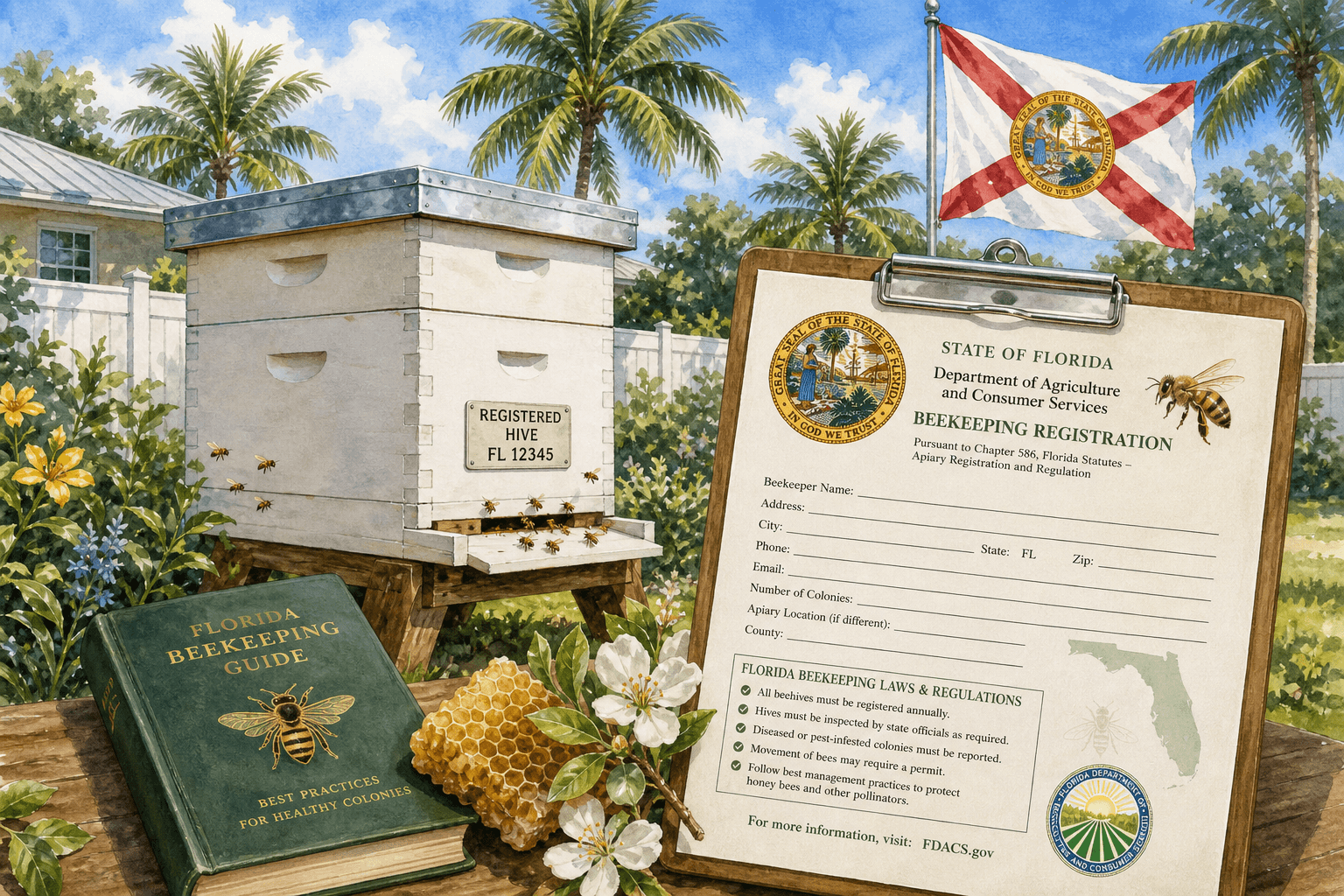
Before you set up your first hive, there's one step you absolutely can't skip: understanding Florida beekeeping laws. The good news? Florida is one of the most beekeeper-friendly states in the country. The important news? There are still rules every beekeeper must follow—even hobbyists with a single hive.
At The Other Bee Guy, we help new beekeepers get started the right way. In this guide, we'll cover hive registration, the beekeeping permit Florida requires, inspection rules, and local ordinances so you can keep bees legally and confidently.
Just getting started? Pair this with our beekeeping for beginners guide.
Are Bees Legal to Keep in Florida?
Yes! Beekeeping is legal throughout Florida and actively encouraged by the state. Florida even has "right to farm" protections and preemption laws that protect registered beekeepers. However, legal beekeeping comes with responsibilities under Florida beekeeping laws.
Hive Registration: The #1 Requirement
The single most important rule in Florida beekeeping laws is mandatory registration.
Who Must Register?
Everyone. Under Florida Statute Chapter 586, all beekeepers—including hobbyists with one hive—must register their colonies with the Florida Department of Agriculture and Consumer Services (FDACS).
How Registration Works
- Cost: Registration is free for hobbyists
- Where: Apply through the FDACS Division of Plant Industry
- Renewal: Registration must be renewed annually
- Inspection: Registration triggers a state apiary inspection
Why Registration Matters
- It's legally required (fines apply for non-compliance)
- It enables state inspectors to monitor for diseases
- It protects Florida's overall bee health
- It qualifies you for "right to farm" legal protections
Key Takeaway: You cannot legally keep bees in Florida without registering. It's free and takes just minutes—there's no reason to skip it.
Do You Need a Beekeeping Permit in Florida?
Many people ask about a beekeeping permit Florida requires. Here's the clarification:
- State level: There's no separate "permit"—registration is the requirement
- Local level: Some cities and counties have additional permits or zoning rules
- Special cases: Selling honey, moving bees commercially, or queen breeding may have extra requirements
So while the state uses "registration" rather than "permit," always check your local government for additional rules.
State Apiary Inspections
Once registered, your apiary becomes subject to inspection by FDACS apiary inspectors.
What Inspectors Look For
- American Foulbrood (AFB): A serious, regulated bee disease
- European Foulbrood
- Africanized honey bees
- Small hive beetle and Varroa levels
- Moveable frame compliance (no fixed-comb hives allowed)
What to Expect
- Inspections are typically free
- Inspectors are helpful resources, not adversaries
- They can help you identify diseases early
- Most beekeepers find inspections educational
The Moveable Frame Requirement
Florida beekeeping laws require all hives to use moveable frames. This means:
- Allowed: Langstroth hives, top-bar hives, Warre hives (with frames)
- Not allowed: Log gums, skeps, or any fixed-comb hive
Why? Inspectors need to be able to remove and examine frames to check for disease. Fixed-comb hives make inspection impossible.
Africanized Honey Bee Regulations
Florida has established Africanized honey bee (AHB) populations, so there are specific rules:
- Beekeepers should source queens from reputable breeders to maintain gentle genetics
- Best Management Requirements (BMRs) apply to registered beekeepers
- Re-queening defensive colonies is strongly encouraged
- The state's BMRs help prevent the spread of AHB genetics
Following the state's Best Management Requirements is part of responsible, legal beekeeping in Florida.
Local Ordinances and HOA Rules
Beyond state Florida beekeeping laws, you must also consider local rules.
Municipal Ordinances
Some Florida cities have additional requirements, such as:
- Setback distances from property lines
- Maximum number of hives per lot size
- Flyway barrier requirements (fencing to direct bee flight upward)
- Water source requirements
HOA Restrictions
This is a big one:
- Many HOAs prohibit beekeeping entirely
- Some allow it with restrictions
- Always check your HOA covenants before buying bees
- HOA rules can be stricter than state or local law
Warning: State registration does NOT override HOA rules. Check your HOA covenants first to avoid costly conflicts.
Selling Honey in Florida
Planning to sell your honey? Florida has favorable "cottage food" laws:
- You can sell honey produced from your own hives
- Honey sold under the cottage food exemption has annual sales limits
- Proper labeling is required (name, address, ingredients, net weight)
- Honey is considered a safe product under cottage food rules
- Selling at farmers markets and roadside stands is generally allowed
Check the latest FDACS cottage food guidelines for current sales thresholds and labeling rules.
Compliance Checklist
Use this quick checklist to stay compliant with Florida beekeeping laws:
- Register all colonies with FDACS (free)
- Renew registration annually
- Use only moveable-frame hives
- Allow state apiary inspections
- Follow Africanized bee Best Management Requirements
- Check city/county ordinances
- Verify HOA rules
- Follow cottage food labeling laws if selling honey
- Maintain a water source for your bees
- Re-queen overly defensive colonies
Frequently Asked Questions
Do I need to register if I only have one hive?
Yes. Florida requires registration for all beekeepers, regardless of how many hives you keep.
How much does it cost to register bees in Florida?
Registration is free for hobbyist beekeepers through FDACS.
Is there a beekeeping permit in Florida?
The state uses registration rather than a permit. However, some local governments may require additional permits or impose zoning rules.
Can my HOA stop me from keeping bees?
Yes. HOA covenants can prohibit or restrict beekeeping even though it's legal at the state level. Always check first.
How often are hives inspected?
The state conducts periodic apiary inspections, typically annually or as needed. Inspections are usually free and educational.
We're Here to Help
Navigating Florida beekeeping laws is straightforward once you know the steps—and we're happy to help new beekeepers get started right. The Other Bee Guy offers education and mentorship, quality nucleus colonies, and professional bee removal services across the Orlando area.
Have questions about getting legal and started? Contact us or call (407) 473-8585.
This article is for general informational purposes and is not legal advice. Always verify current requirements with FDACS and your local government.