
Raw Honey vs. Processed Honey: What's the Difference?
Walk down any grocery store aisle and you'll find dozens of honey options. But not all honey is created equal. The debate of raw vs processed honey is one of the most important things to understand if you care about flavor, nutrition, and quality.
At The Other Bee Guy, the colonies we rescue and relocate go on to produce genuine raw Florida honey. We know firsthand what makes raw honey special. In this guide, we'll break down the real differences and explore the raw honey benefits that processed honey simply can't match.
Want to taste the difference? Check out our local honey from rescued Florida colonies.
What Is Raw Honey?
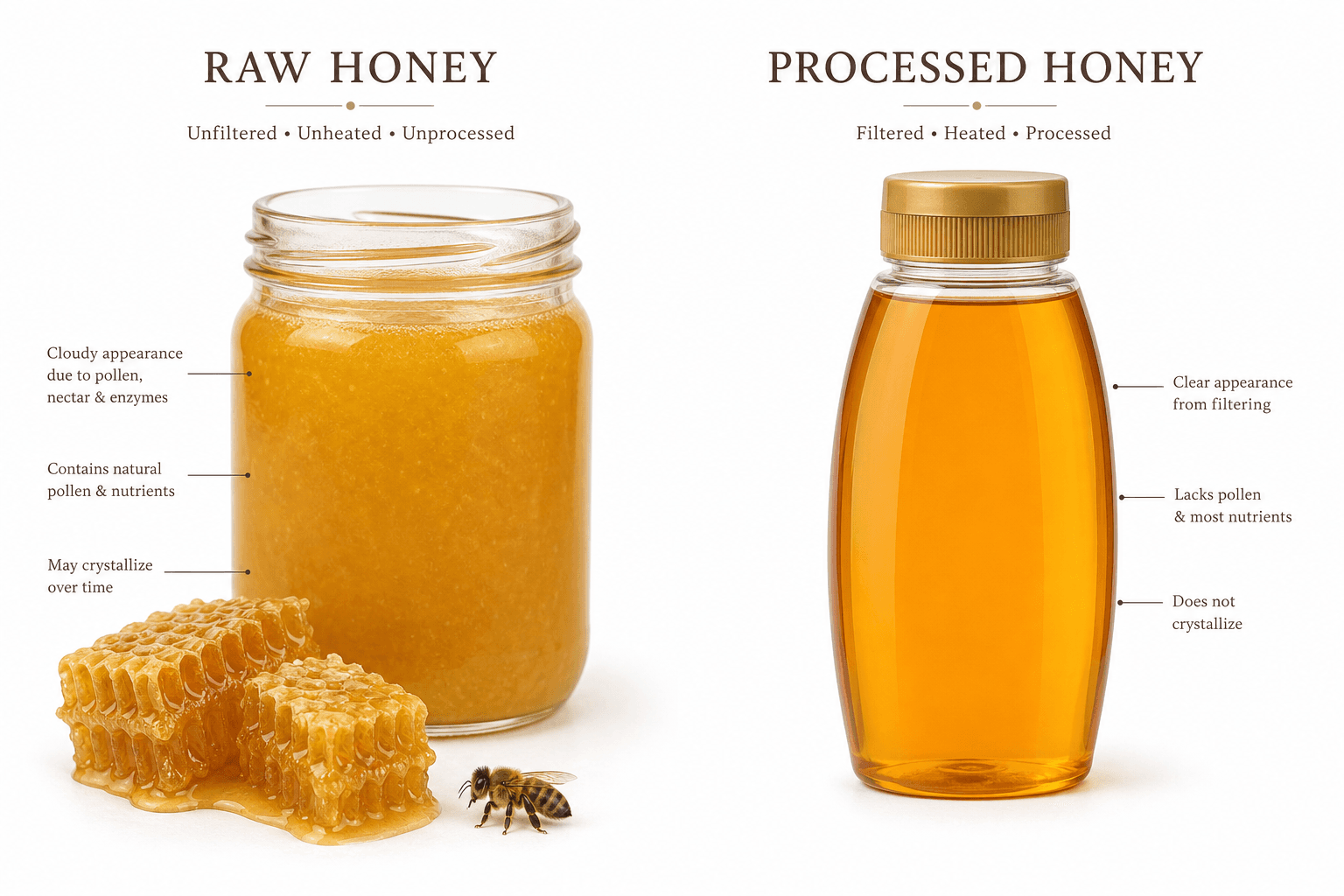
Raw honey is honey as the bees made it—pure, unfiltered, and unheated. After extraction from the comb, it's typically only strained to remove large debris like wax bits and is then bottled.
Raw honey characteristics:
- Cloudy or opaque appearance
- May contain tiny pollen particles
- Crystallizes over time (a sign of authenticity!)
- Rich, complex flavor that varies by floral source
- Retains natural enzymes, antioxidants, and pollen
What Is Processed Honey?
Processed (or "commercial") honey goes through heat treatment and fine filtration before bottling. This is what most mass-produced grocery store honey is.
Processed honey characteristics:
- Crystal clear appearance
- Smooth, uniform texture
- Resists crystallization
- Milder, more generic flavor
- Longer shelf stability
Why Is Honey Processed?
Manufacturers process honey for practical, commercial reasons:
- Pasteurization (heating): Kills yeast and delays crystallization for a longer shelf life
- Fine filtration: Creates the clear look consumers expect
- Easier bottling: Heated honey flows faster through machinery
- Uniform product: Consistent color and texture across batches
The downside? This processing strips away many of the natural compounds that make honey beneficial.
Raw vs Processed Honey: Side-by-Side
| Feature | Raw Honey | Processed Honey |
|---|---|---|
| Heat treatment | None | Pasteurized |
| Filtration | Minimal (strained) | Fine filtered |
| Appearance | Cloudy | Clear |
| Pollen content | Present | Removed |
| Enzymes | Retained | Largely destroyed |
| Antioxidants | High | Reduced |
| Crystallization | Yes (natural) | Resists |
| Flavor | Complex, varietal | Mild, uniform |
| Nutritional value | Higher | Lower |
The Raw Honey Benefits You're Missing
So why do so many people seek out raw honey? Here are the key raw honey benefits:
1. Natural Antioxidants
Raw honey contains antioxidants like flavonoids and phenolic acids. These compounds are reduced or destroyed during heat processing.
2. Beneficial Enzymes
Raw honey retains natural enzymes like glucose oxidase, which contributes to honey's antimicrobial properties. Pasteurization destroys many of these enzymes.
3. Trace Pollen and Nutrients
Raw honey contains small amounts of bee pollen, which carries trace vitamins, minerals, and amino acids. Fine filtration removes this pollen entirely.
4. Local Allergy Support
Many people use local raw honey hoping to build tolerance to local pollen. Because processed honey has the pollen filtered out, only raw local honey offers this potential benefit.
5. Superior Flavor
Raw honey carries the distinct character of its floral source—orange blossom, wildflower, gallberry, and more. Processing blends and mutes these unique flavors.
6. Antimicrobial Properties
Raw honey's natural compounds give it mild antibacterial qualities, which is why it's been used traditionally for soothing sore throats and minor wound care.
Does Crystallized Honey Mean It's Bad?
This is a common misconception. Crystallization is actually a sign of quality and authenticity.
- Raw honey naturally crystallizes over time
- It does NOT mean the honey has spoiled
- Processed honey resists crystallizing because filtration removes the particles that trigger it
- To re-liquefy, gently warm the jar in warm water (never microwave—it destroys enzymes)
If your honey never crystallizes, it may be heavily processed—or not pure honey at all.
The Problem With "Fake" Honey
Beyond processing, some commercial honey is adulterated with cheaper sweeteners like corn syrup or rice syrup. Ultra-filtered honey can even have its pollen removed entirely, making it impossible to trace its origin.
How to ensure you're getting real raw honey:
- Buy from local beekeepers you trust
- Look for "raw" and "unfiltered" on the label
- Expect crystallization over time
- Be skeptical of suspiciously cheap honey
- Choose honey with a traceable local source
How to Choose the Best Honey
When deciding between raw vs processed honey, consider your priorities:
Choose raw honey if you want:
- Maximum nutritional benefits
- Complex, varietal flavors
- Potential local allergy support
- To support local beekeepers
Processed honey might suffice if you only need:
- A cheap sweetener for baking
- Long shelf stability
- A perfectly clear appearance
For most people who care about quality and health, raw local honey is the clear winner.
Frequently Asked Questions
Is raw honey healthier than processed honey?
Raw honey retains more antioxidants, enzymes, and pollen than processed honey, which loses many of these compounds during heating and filtration.
Why does raw honey crystallize?
Crystallization is a natural process caused by the glucose in honey. It's a sign of pure, raw honey and does not mean it has gone bad.
Can I use raw honey for allergies?
Many people use local raw honey hoping to build tolerance to local pollen. Because the pollen is intact in raw honey, only raw local varieties offer this potential benefit.
Is grocery store honey raw?
Most mass-produced grocery store honey is processed (pasteurized and filtered). Always check the label for "raw" and "unfiltered," and ideally buy from a local source.
How should I store raw honey?
Store raw honey at room temperature in a sealed container. Avoid refrigeration (it speeds crystallization) and never overheat it.
Taste the Raw Difference
Once you've experienced genuine raw honey, it's hard to go back. The colonies we rescue through our bee removal and relocation services produce delicious, authentic raw Florida honey—orange blossom, wildflower, and saw palmetto varieties.
Ready to taste real raw honey benefits for yourself? Explore our local honey or contact us to learn more. Every jar supports our mission of saving bees, one colony at a time.